


By Benson Daniel
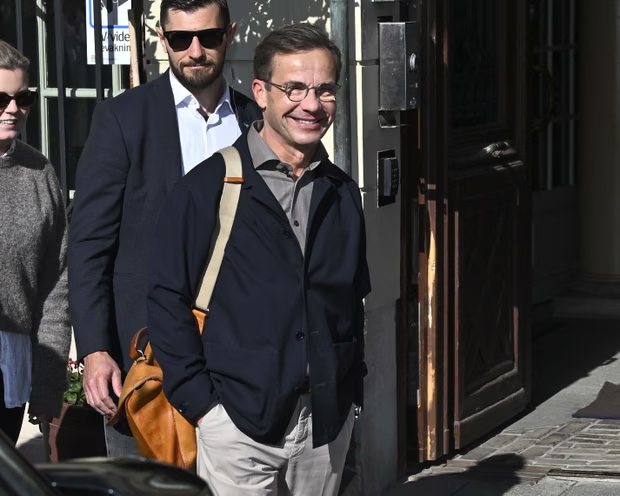
Swedish Prime Minister Ulf Kristersson has resigned after his governing bloc was defeated in the country’s parliamentary election, bringing his four-year tenure in office to an end and opening negotiations over the formation of a new government.
The final results gave the opposition bloc 176 seats in Sweden’s 349-member Riksdag, compared with 173 seats for Kristersson’s governing alliance and its parliamentary partners. The margin between the two blocs was about 50,000 votes.
Kristersson, who leads the Moderate Party, formally stepped down after the result confirmed that his coalition could no longer command the parliamentary balance needed to continue governing. In a statement, he said the narrow outcome could make the process of forming a new administration more complicated and called for constructive cooperation among parties in parliament.
The election has put Social Democratic leader Magdalena Andersson in a position to seek a return as prime minister. Andersson previously served as Sweden’s prime minister before her party and its allies lost power in the 2022 election.
However, the opposition’s parliamentary majority is narrow, and forming a stable government could require difficult negotiations among the parties that make up the bloc. The Social Democrats emerged as the largest party, but their own vote share declined compared with the previous election.
The Sweden Democrats, who have supported Kristersson’s government and were expected to gain a more formal role in government after the election, suffered a decline in their vote share. Their performance contributed to the change in the parliamentary balance between the two major blocs.
Kristersson became prime minister in 2022 after the previous election produced a narrow advantage for the right-wing bloc. His government subsequently relied on cooperation with the Sweden Democrats on parliamentary support and policy.
The latest result reverses that parliamentary balance and begins a new period of negotiations. Sweden’s system requires a prime minister to be accepted by parliament, meaning Andersson and her allies will need to secure sufficient support before a new government can take office.
The political transition comes as Sweden continues to face major domestic and international issues, including the economy, immigration, crime and security policy. The country also remains closely involved in European security affairs following its accession to NATO in 2024.
The immediate focus will now shift to the parliamentary process for selecting a new prime minister and determining the composition of the next government. The narrow election result means negotiations between the different parties are likely to play a central role in determining Sweden’s political direction.







Leave a comment