


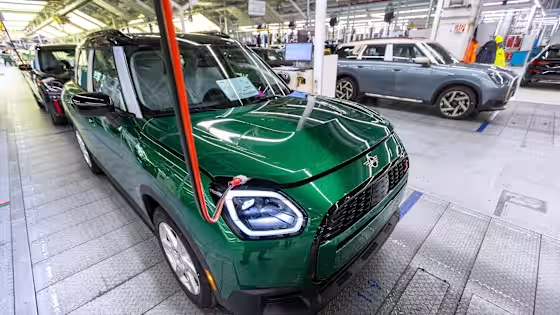
European carmakers have warned that stricter trade rules between the European Union and the United Kingdom could cause serious disruption to the automotive industry, with manufacturers calling for more time to adjust their supply chains.
The industry is particularly concerned about changes to the rules of origin governing electric vehicles and other vehicles traded between Britain and the EU. Under the arrangements, cars must meet specific local-content requirements to qualify for preferential tariff treatment.
Automotive manufacturers argue that the requirements are becoming increasingly difficult to meet because supply chains for electric vehicles are still heavily dependent on components produced outside Europe. Batteries, which account for a significant share of an electric vehicle’s value, are a particular concern.
The car industry has therefore called for the implementation of stricter rules to be delayed, arguing that manufacturers need additional time to establish more European-based supply chains.
The warning comes as the European and British automotive industries navigate a broader shift towards electric vehicles while dealing with higher production costs, intense international competition and changing trade arrangements.
Under the EU-UK trade agreement, vehicles that fail to meet the required local-content thresholds can face tariffs when crossing the border. For manufacturers operating complex production networks across Europe and Britain, such charges could add substantially to costs.
Industry representatives have described the potential consequences of applying the stricter requirements too quickly as severe, particularly for companies that have invested heavily in electric vehicle production but still rely on imported batteries and other components.
The dispute also highlights the difficulties created by Brexit for an industry whose production system was built around closely integrated European supply chains. Vehicle parts can cross national borders several times before a finished car reaches the market, making changes to trade rules particularly significant for manufacturers and suppliers.
Electric vehicle production has added another layer of complexity. Battery materials and cells are often sourced from countries outside Europe, while manufacturers are still developing domestic battery capacity. This makes it harder for some vehicles to satisfy increasingly demanding origin requirements.
For consumers, higher tariffs could eventually feed into vehicle prices if manufacturers are unable to absorb the additional costs. For companies, the rules could influence decisions about where to manufacture vehicles, source components and invest in future production capacity.
The European automotive sector is already under pressure from rising competition from Chinese electric vehicle manufacturers, weak demand in some markets and the expensive transition away from conventional petrol and diesel vehicles.
Manufacturers therefore want governments on both sides of the English Channel to provide greater certainty while companies build the infrastructure and supplier networks needed to comply with the new requirements.
The debate is expected to remain an important issue in EU-UK economic relations, particularly as both sides seek to protect automotive jobs and investment while maintaining trade flows between two closely connected markets.











Leave a comment