


By Benson Daniel
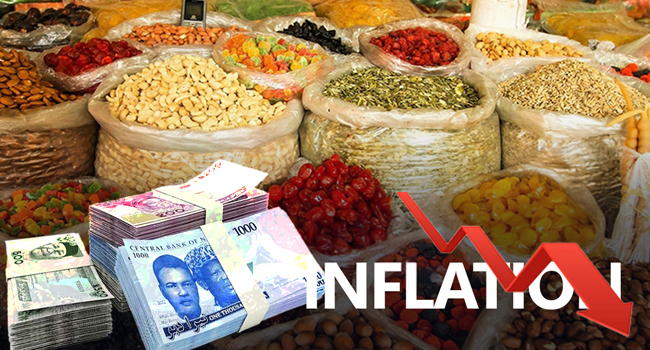
Nigeria’s headline inflation rate eased to 15.39 per cent in August 2026, extending the recent moderation in consumer price pressures as food inflation and monthly price growth recorded significant declines.
The latest figure, released in the August Consumer Price Index report, represents a marginal 0.04 percentage-point decline from the 15.43 per cent recorded in July. It is also substantially lower than the 23.14 per cent recorded in August 2025.
The August figure marks the third consecutive month of decline in headline inflation, although the marginal movement from July indicates that price pressures remain present across the economy.
On a month-on-month basis, inflation slowed considerably to 0.71 per cent in August from 1.57 per cent in July. The movement indicates that the average prices of goods and services continued to rise during the month, but at a slower pace than in July.
Food prices provided much of the improvement recorded during the month. Food inflation fell to 19.57 per cent year-on-year in August, compared with 25.30 per cent in August 2025.
The monthly food inflation rate also declined sharply to 1.02 per cent from 5.56 per cent in July, representing a 4.55 percentage-point reduction. The moderation was linked to movements in the prices of several food items, including palm oil, pepper, onions, carrots, cassava flour, beef, yam flour, fresh fish and Irish potatoes.
Core inflation, which excludes volatile agricultural produce and energy, also moderated. It stood at 13.29 per cent year-on-year in August, while the month-on-month rate was negative 0.06 per cent, compared with 0.15 per cent in July.
The latest figures nevertheless show that inflation remains uneven across the country. Urban inflation stood at 15.88 per cent year-on-year, while rural inflation was 14.23 per cent.
State-level figures also showed significant differences in food-price pressures. Adamawa recorded the highest year-on-year food inflation rate at 38.85 per cent, followed by Zamfara at 37.96 per cent and Bayelsa at 36.20 per cent. Borno recorded a negative year-on-year food inflation rate of 4.04 per cent, while Jigawa and Kebbi recorded 0.23 per cent and 3.47 per cent respectively.
The contrast is particularly important for households because food remains one of the largest components of consumer spending. A moderation in the national inflation rate does not necessarily mean that prices have fallen; rather, it indicates that prices are increasing at a slower rate.
For businesses, slower inflation could gradually ease some operating pressures, particularly if the moderation in food, goods and services prices continues. It could also influence monetary-policy decisions as authorities assess whether inflation is moving sustainably lower.
The Consumer Price Index itself rose to 146.3 points in August from 145.3 points in July, underscoring that the general price level continued to increase even as the inflation rate slowed.
The August data therefore presents a mixed picture for Nigeria’s economy: the pace of inflation is slowing, but households and businesses are still operating in an environment where prices remain considerably higher than they were a year earlier.
Sustaining the moderation will depend on developments in food supply, energy costs, exchange-rate conditions, transportation expenses and other factors affecting production and distribution across the economy.










Leave a comment