


By Benson Daniel
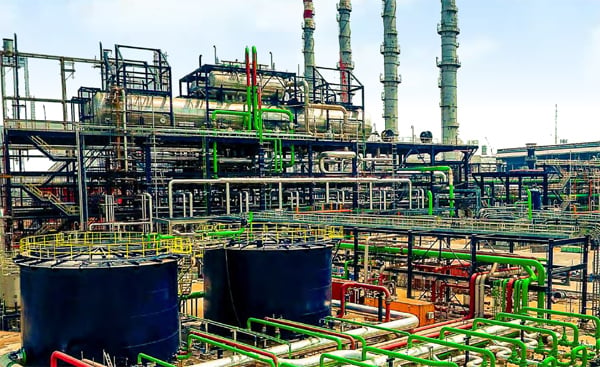
The Dangote Refinery is creating opportunities across multiple sectors of Nigeria’s economy and could deepen local participation in industrial and investment activities, the Manufacturers Association of Nigeria (MAN) has said.
Chairman of MAN’s Kano-Jigawa branch, Muhammad Bello Isyaku Umar, described the refinery as a major catalyst for greater economic inclusion, pointing to its potential impact on manufacturers, transporters, farmers, distributors, small businesses and consumers.
His comments come as the Dangote Petroleum Refinery and Petrochemicals opens its initial public offering (IPO) to investors, providing Nigerians and other eligible investors with an opportunity to acquire shares in the strategic industrial project.
The public offer opened on September 14 and involves 4.1 billion shares priced at ₦525 each. The minimum subscription is 10 shares, while the offer is scheduled to close on October 13.
Umar said the refinery’s emergence represents an important step towards reducing Nigeria’s dependence on imported refined petroleum products while strengthening domestic production and conserving foreign exchange.
He noted that increased refining capacity could provide a more stable supply of petroleum products and reduce some of the uncertainties faced by businesses that depend on imported fuel and other refined products.
According to him, the refinery’s impact extends beyond the petroleum industry because its operations are linked to several areas of economic activity.
Manufacturers, transport operators, farmers, distributors and small and medium-sized enterprises all depend on reliable energy supplies and efficient supply chains. Greater domestic refining capacity, he argued, could therefore produce benefits across these interconnected sectors.
Umar also highlighted the potential of the refinery to support local industrialisation through demand for logistics, transportation, engineering, maintenance, storage, distribution and other services associated with the petroleum value chain.
Such activity could generate additional business opportunities for companies of different sizes while supporting employment and investment.
He welcomed the refinery’s IPO as another important dimension of the project, arguing that public participation could broaden Nigerians’ involvement in one of the country’s largest industrial investments.
The public offer is designed to allow eligible investors to become shareholders in the refinery, subject to allotment. The proceeds are expected to support the company’s expansion plans, including efforts to increase refining capacity significantly over the coming years.
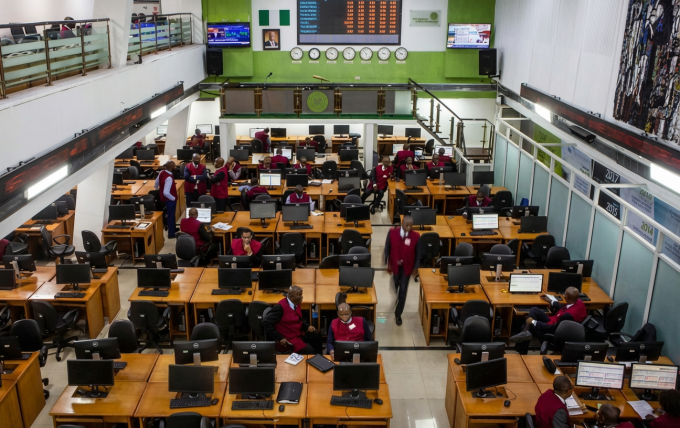
Umar said the listing could also deepen Nigeria’s capital market by attracting more domestic and international investment and demonstrating the capacity of large Nigerian industrial projects to access the market.
He further argued that the refinery and other investments by the Dangote Group in sectors such as cement, fertiliser and food processing demonstrate how large-scale private investment can contribute to economic diversification and local production.
For manufacturers, he said, policies that encourage such investments should be accompanied by a stable and competitive business environment capable of allowing companies to expand and create jobs.
The MAN chairman also called for stronger cooperation between government, industry associations and major private-sector investors to ensure that the opportunities created by large industrial projects are widely maximised.
The refinery has increasingly become an important part of Nigeria’s energy and industrial landscape. Its operations are also being expanded as the company seeks to increase capacity from its current level of about 700,000 barrels per day to 1.4 million barrels per day.
Beyond its role in refining petroleum products, the wider economic significance of the project is now being linked to capital-market participation, domestic manufacturing, employment, supply-chain development and reduced dependence on imported refined products.
Umar said the long-term value of the refinery should therefore be measured not only by the volume of fuel and other products it produces, but also by its ability to create opportunities for Nigerian businesses and individuals to participate in the formal economy.
He expressed optimism that the refinery’s expansion and public offering would contribute to deeper industrialisation, stronger energy security and broader economic growth.







Leave a comment