


By Benson Daniel
The global shift away from oil could create a wave of economic and political instability, including conflict and mass migration, unless oil dependent countries are given support to manage the transition, new research has warned.
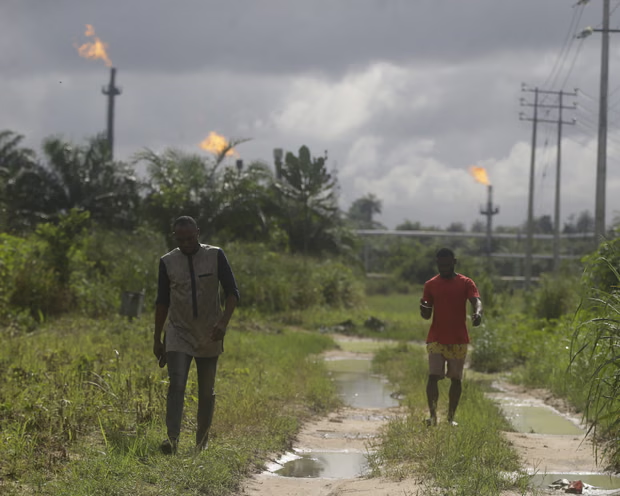
Countries including Nigeria, Iran, Angola and Algeria face significant risks because their economies and public finances remain heavily dependent on oil revenues, while limited diversification and weak financial buffers could make it difficult to absorb a prolonged decline in oil income.
The warning comes as renewable energy continues to expand and global oil demand is expected to plateau before reaching a likely peak in the early 2030s. As demand begins to weaken, producers will be forced to compete for a shrinking market, with countries able to produce oil cheaply expected to have an advantage over higher cost producers.
For countries that depend heavily on petroleum revenue to finance government operations and public services, the consequences could be severe.
The research estimates that Algeria could experience an 87 per cent decline in oil revenue, while Nigeria could face a drop of more than 60 per cent as the energy transition gathers pace.
Such a fall in revenue could leave governments struggling to maintain essential services, service debts and sustain economic programmes, potentially creating conditions for social unrest and political instability.
Researchers warned that the impact would not necessarily come as one global oil crisis. Instead, a series of national fiscal crises could emerge and develop into different security challenges depending on the country.
Nigeria, for example, could experience weaker state capacity, with the effects potentially spreading across other parts of Africa. In Algeria, economic pressure could contribute to unrest and increased migration, while countries such as Libya could face heightened competition over oil infrastructure.
The study also points to Venezuela as a warning of what prolonged economic and political instability can do to an oil dependent state.
Experts stressed that slowing the transition away from fossil fuels would not provide a lasting solution. Instead, they argued that governments should prepare vulnerable economies for the decline in oil revenues while continuing efforts to reduce greenhouse gas emissions.
The report called for greater coordination between oil producing countries, major energy consuming nations, international financial institutions and private sector investors.
Institutions such as the International Monetary Fund and World Bank could play a role in helping vulnerable economies strengthen their finances, diversify their economies and prepare for declining petroleum revenues.
Researchers also urged major oil consuming countries to provide clearer signals about future energy demand so that producers can plan ahead rather than being caught by a sudden collapse in their traditional markets.
China, once the main driver of rising global oil demand, is already showing signs of declining consumption, partly because of the rapid expansion of electric vehicles. India, meanwhile, remains less certain and could become an important factor in determining how quickly global oil demand falls.
For Nigeria, the warning adds urgency to long standing efforts to reduce dependence on crude oil and broaden government revenue sources. A sustained fall in petroleum income could place additional pressure on public finances if alternative sources of growth and revenue are not developed quickly.
The researchers said governments should treat the energy transition not only as a climate issue but also as an economic and national security challenge.











Leave a comment