


By Benson Daniel
Nepal has called on the world’s biggest greenhouse gas emitters to accept greater responsibility for the devastating floods that swept through parts of the Himalayan country, demanding $20 million in climate compensation to help address the disaster.
Foreign Minister Shisir Khanal said major polluting nations must “wake up” to the growing consequences of climate change and support vulnerable countries that contribute little to global emissions but continue to bear the brunt of extreme weather events.
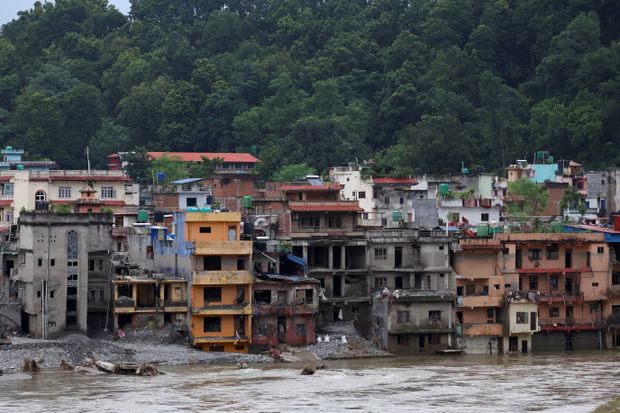
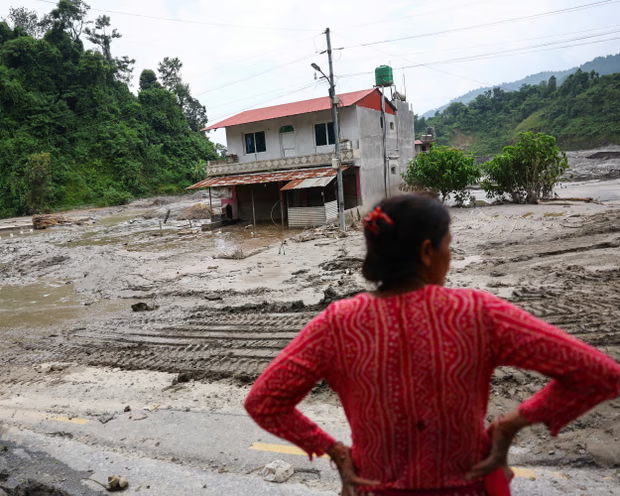
The demand followed catastrophic flooding triggered by the partial collapse of a melting glacier in late August. The resulting landslide and flash floods devastated communities across Nepal and neighbouring areas of Chinese controlled Tibet.
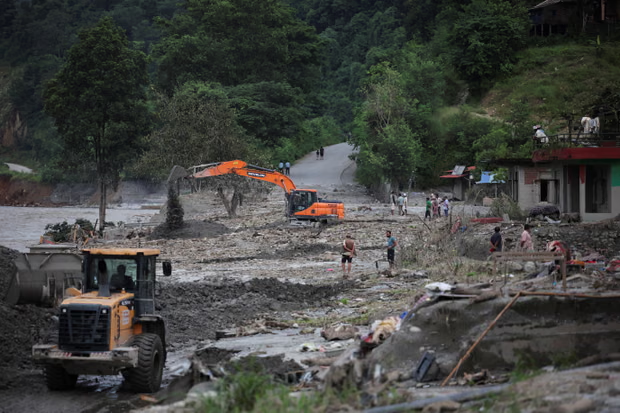
More than 1,300 people have been confirmed dead, while over 5,500 remain missing, according to the latest reports. Rescue operations have continued in several affected areas, although hopes of finding survivors have diminished as the disaster enters its second week.
Khanal said Nepal’s contribution to global greenhouse gas emissions is less than 0.1 per cent, arguing that countries with much larger historical and current emissions should accept a shared responsibility for the growing climate risks faced by vulnerable nations.
The Nepalese government has formally approached the UN’s loss and damage fund for $20 million to help address climate related losses arising from the disaster.
The foreign minister stressed that the request was not simply about obtaining emergency assistance but about establishing a stronger international mechanism capable of helping countries prepare for and recover from increasingly destructive climate events.
The floods have caused widespread destruction, wiping out villages, damaging roads and destroying critical infrastructure, including hydropower facilities. More than 20,000 homes are expected to require reconstruction, while some communities may have to be relocated to safer areas because of their exposure to future disasters.
The economic consequences are also expected to be substantial. Nepal’s hydropower sector, a major source of electricity and export revenue, suffered extensive damage, with several projects affected by floodwaters, landslides and debris.
Khanal argued that the disaster should serve as a warning to the international community as climate change continues to increase risks in vulnerable regions.
He said the scale and speed of the flooding demonstrated the need for stronger disaster preparedness, early warning systems and greater investment in climate resilience.
Nepal’s appeal has also renewed debate over the effectiveness of the international loss and damage financing system. The UN fund has received requests running into billions of dollars but has so far secured only a fraction of the resources needed to meet the demands of climate vulnerable countries.
The minister acknowledged that securing compensation would face political challenges but maintained that the principle behind Nepal’s demand was broader than seeking assistance from individual countries.
He called for international cooperation to ensure that nations with limited responsibility for global warming are not left to shoulder the financial burden of climate disasters alone.
For Nepal, the latest floods have become a stark demonstration of the country’s vulnerability to a rapidly warming Himalayan environment, with officials warning that similar disasters could become more frequent and destructive unless global emissions are reduced and vulnerable communities receive greater support.














Leave a comment