


By Benson Daniel
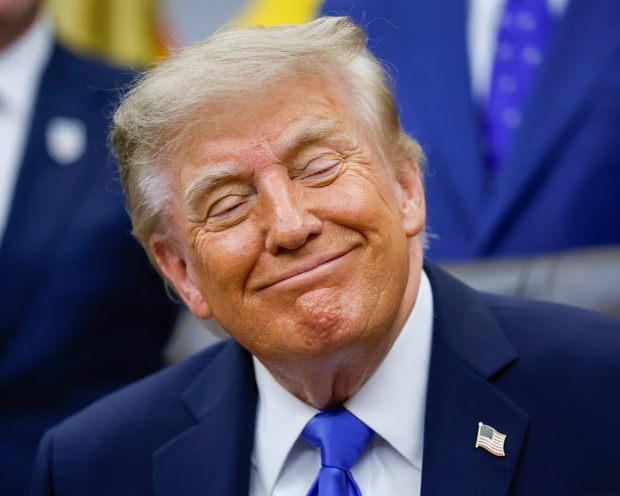
US President Donald Trump has placed himself at the top of a ranking of America’s presidents, declaring himself the greatest leader in the country’s history, a judgment that stands in sharp contrast to assessments from presidential historians and academic experts.
Trump shared a chart on his Truth Social account ranking US presidents across categories including “greatest,” “great,” “near great,” “average” and “failures.” He placed himself alone in the top category, ahead of figures such as George Washington, Abraham Lincoln and Franklin D. Roosevelt.
The ranking immediately drew attention because of the stark difference between Trump’s assessment of his own presidency and the conclusions reached in surveys of presidential scholars.
The chart was based on a modified version of a presidential ranking that originally appeared in Life magazine in 1948. Trump’s name was added to the highest category, while several more recent presidents were placed in lower categories. Some prominent presidents, including Ronald Reagan, Dwight Eisenhower and John F. Kennedy, were also absent from the ranking.
Academic assessments have produced a markedly different picture.
The latest Presidential Greatness Project survey, which drew responses from more than 150 scholars, gave Trump an average score of 10.92, putting him last among the 45 presidents included in the study. Other surveys have similarly placed him close to the bottom of the historical rankings.
A Siena College poll also ranked Trump among the three lowest rated presidents and placed him last on measures including integrity and intelligence. The results highlight the continuing divide between Trump’s standing among his political supporters and his assessment among specialists who study presidential leadership and American political history.
Trump’s supporters, however, argue that his presidency should be judged by the policies and changes he has pursued rather than by the controversies surrounding his political career.
His administration has pointed to issues including investment, economic policies, border enforcement and other measures as evidence of what it considers a consequential presidency. Trump has also repeatedly argued that his approach to government represents a break from traditional political leadership.
His critics contend that his record on democratic institutions will play a major role in determining how historians ultimately view his presidency. They point particularly to his refusal to accept the outcome of the 2020 presidential election and the events surrounding the January 6, 2021 attack on the US Capitol.
Historians have also questioned whether Trump’s efforts to shape his own legacy can influence how future generations assess his time in office. Presidential reputations are typically evaluated years after administrations end, as scholars gain access to historical records and can assess policies and their longer term consequences.
The dispute over Trump’s ranking comes as he remains heavily focused on his political legacy. With the 2026 midterm elections approaching, he has continued to promote his record and encourage Republican candidates to campaign on the achievements of his administration.
For Trump, the self ranking is consistent with his long standing belief that his presidency has been historically significant. For many presidential scholars, however, the evidence currently points in the opposite direction.
Ultimately, the question of where Trump belongs in the history of American presidents will not be settled by his own ranking or by today’s academic surveys. His final place will depend on how his full record, including the consequences of his second term, is viewed after his presidency ends.









Leave a comment