


By Benson Daniel
The Federal Government has stressed the need to strengthen the resilience of Nigeria’s electricity grid, describing reliable power infrastructure as a critical component of national and global energy security.
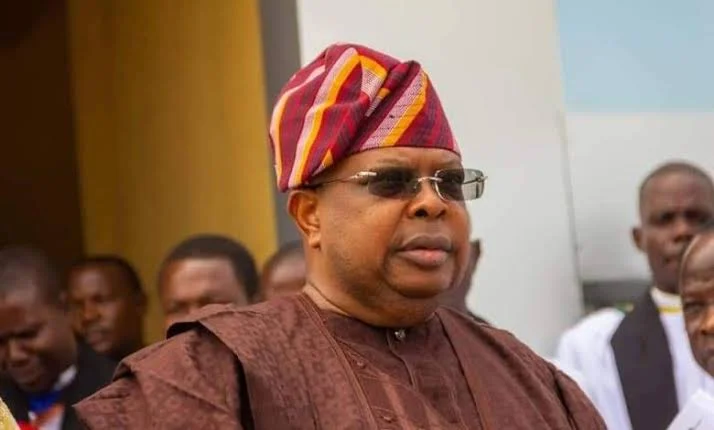
The Minister of Power, Joseph Tegbe, said electricity grids must now receive the same strategic attention traditionally given to fuel supplies as countries seek to protect their economies from geopolitical and economic disruptions.
Tegbe made the remarks while delivering a keynote address at the opening plenary of the Middle East Energy 2026 Leadership Summit in Dubai, where he spoke on energy security and the effects of geopolitics.
He said the changing global energy landscape had made resilient electricity infrastructure increasingly important to national security, adding that energy security could no longer be measured solely by the availability of oil and gas resources.
According to him, a comprehensive approach must include the resilience of electricity grids, critical mineral supply chains, access to capital and the strength of institutions responsible for managing energy systems.
The minister said countries must be able to maintain electricity supplies to homes, hospitals and industries even during periods of geopolitical tension, economic instability and other major disruptions.
He also identified affordability as an important element of energy security, arguing that energy systems must not only be reliable but also capable of providing electricity at costs that households and businesses can sustain.
Tegbe said Nigeria’s ongoing power sector reforms were designed to create the certainty needed to attract long term investment into the industry.
He identified regulatory certainty, respect for contractual agreements and bankable electricity offtake arrangements as essential conditions for attracting private capital and strengthening the power market.
The minister also highlighted Nigeria’s more than 200 trillion cubic feet of proven natural gas reserves and its longstanding record of supplying liquefied natural gas to international markets, saying the country has an important role to play in global energy security.
He described the Electricity Act 2023 as one of the most significant reforms of Nigeria’s power sector in a generation, noting that the legislation ended the Federal Government’s longstanding monopoly and opened the way for 37 emerging electricity markets across the federation.
Tegbe said the reforms were intended to create a more competitive and investment friendly electricity market while allowing states and other stakeholders to play greater roles in power generation and distribution.
He warned that investors could accommodate commercial risks but would struggle with uncertainty arising from unpredictable policies or changes to agreements after investments had been made.
The minister further argued that Africa should occupy a central position in discussions about the future of global energy security, given its vast mineral resources, solar potential, growing population and rapidly increasing electricity demand.
He noted that about 600 million people across Africa still lack access to electricity, highlighting the enormous investment opportunity available in the continent’s energy sector.
Tegbe called for partnerships that would go beyond the extraction of Africa’s raw resources, urging greater emphasis on local processing, manufacturing, skills development and the provision of patient capital.
He said Nigeria was ready to work with international investors and development partners to build stronger energy infrastructure capable of supporting economic growth and improving electricity access.
The minister maintained that a resilient and affordable power system would be essential to Nigeria’s industrialisation, job creation and broader economic development.
He also called for an orderly and fair global energy transition that recognises the different circumstances and development needs of individual countries.









Leave a comment