


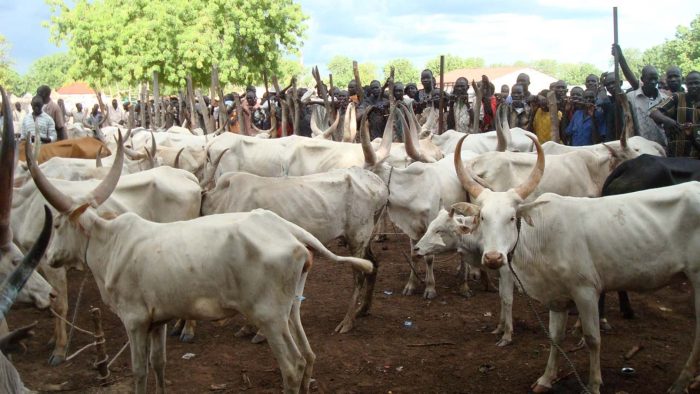
The Federal Government has intensified collaboration with state governments and private-sector stakeholders to transform Nigeria’s livestock industry, with a renewed focus on modernising production, improving productivity and strengthening the value chain.
The Ministry responsible for livestock development Idi Mukhtar Maiha, disclosed this at the weekend during a ministerial briefing in Abuja, he said the partnership is aimed at creating a more productive, sustainable and commercially viable livestock sector capable of contributing significantly to food security, employment generation and economic growth.
The ministry said closer cooperation among federal and state authorities, investors, livestock farmers, processors and other value-chain participants would be essential to addressing longstanding challenges affecting the industry.
Nigeria’s livestock sector provides livelihoods for millions of people and supports a wide range of businesses, including animal feed production, veterinary services, meat and dairy processing, transportation and marketing.
However, stakeholders have identified inadequate infrastructure, limited access to finance, low productivity, animal diseases, insufficient feed and weak processing capacity among the major challenges limiting the sector’s potential.
The ministry said the renewed partnership would seek to address these constraints through coordinated investments and policies that encourage modern livestock production systems.
Particular attention is expected to be given to improving animal health and veterinary services, developing feed resources, expanding access to improved breeds and strengthening livestock infrastructure.
The government also highlighted the importance of developing modern processing facilities to reduce post-production losses and increase the value derived from livestock products.
Stakeholders said greater investment in meat, milk, leather and other livestock-related value chains could create new opportunities for farmers, entrepreneurs and investors while reducing Nigeria’s dependence on imported animal products.
The ministry urged state governments to develop livestock policies and programmes that complement national efforts while taking into account the specific needs and production systems of their respective communities.
Private-sector participation was also identified as critical to the transformation agenda, particularly in areas such as financing, processing, logistics, technology, animal feed and commercial livestock production.
Experts said stronger public-private partnerships could help mobilise the capital and technical expertise required to modernise the sector.
They also called for increased investment in research and innovation to improve animal breeds, disease control, feed efficiency and climate resilience.
Climate change remains a major concern for livestock producers, with changing weather patterns, declining pasture availability and water shortages affecting production in several parts of the country.
Stakeholders therefore advocated greater adoption of climate-smart livestock practices, including improved pasture management, water conservation and alternative feed systems.
The ministry further emphasised the importance of strengthening livestock farmers’ access to affordable finance, insurance and extension services.
Such interventions, stakeholders said, would enable producers to invest in better housing, improved breeds, animal health and modern production technologies.
The collaboration is also expected to support efforts to promote peaceful coexistence among agricultural communities by encouraging more efficient and organised livestock production systems.
Government officials stressed that sustainable livestock development must involve meaningful engagement with farmers, pastoralists, communities, businesses and other stakeholders.
They urged all partners to support policies that promote investment while protecting livelihoods and ensuring responsible use of land and other natural resources.
The ministry reaffirmed its commitment to working with state governments and private-sector organisations to build a stronger livestock value chain from production to processing and marketing.
Stakeholders expressed optimism that sustained collaboration could unlock the sector’s enormous economic potential and position livestock as a stronger contributor to Nigeria’s food security and national development.
They said a modern livestock industry would not only increase the availability of meat, milk and other animal products but also generate employment, improve rural incomes and strengthen Nigeria’s agricultural economy.










Leave a comment