


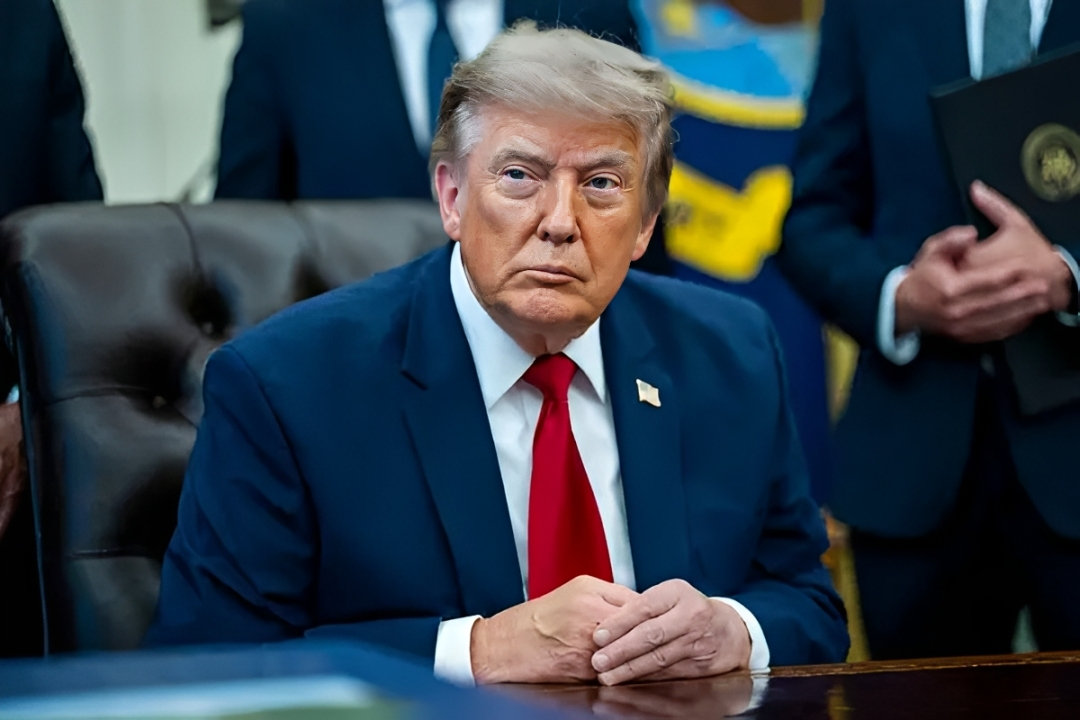
U.S. President Donald Trump on Thursday signed two executive orders aimed at restricting access to birthright citizenship, renewing a contentious immigration policy initiative weeks after the U.S. Supreme Court rejected an earlier effort to end the constitutional guarantee.
One of the executive orders broadens the categories of non-citizens whose children would not automatically qualify for U.S. citizenship at birth. The second order seeks to curb so-called birth tourism by directing federal agencies to deny entry to foreign nationals believed to be travelling to the United States primarily to give birth.
“This should have happened years ago, but we’re taking care of it now,” Trump said while announcing the measures from the Oval Office, criticising the Supreme Court’s recent decision that preserved birthright citizenship under the 14th Amendment to the U.S. Constitution.
According to the White House, children born in the United States to two non-citizen parents may be denied automatic citizenship if one parent is identified as a member of a designated foreign terrorist organisation, a foreign government employee, someone who attempted to obtain immigration status through fraud, or a resident of a U.S. territory where citizenship is not automatically granted by federal law.
The administration also moved to prohibit birth tourism, a practice in which pregnant women travel to the United States to give birth so their children obtain U.S. citizenship. Homeland Security adviser and White House deputy chief of staff for policy Stephen Miller said the new policy is intended to prevent abuse of the immigration system.
“The idea is that people come here pretending to be tourists, but the real reason they’re here is to have a child who automatically becomes an American citizen,” Miller said. He argued that such children later gain access to government benefits and other rights reserved for U.S. citizens.
Trump claimed that hundreds of thousands of babies are born each year through birth tourism. However, estimates from the nonpartisan Migration Policy Institute indicate that between 22,000 and 26,000 births annually may be linked to the practice. U.S. government data cited by the institute recorded approximately 9,600 births to mothers with foreign addresses in 2024.
The executive orders represent Trump’s latest attempt to narrow birthright citizenship after the Supreme Court ruled in June that his 2025 executive action seeking to end the practice could not stand. The ruling reaffirmed that children born in the United States are citizens under the Constitution, regardless of their parents’ immigration status in most circumstances.
Legal experts questioned whether the latest measures would withstand judicial scrutiny. Gabriel Chin, a professor at the University of California Davis School of Law, said while the president may have authority to limit entry for individuals travelling specifically for birth tourism, determining whether a child born in the United States is a citizen is governed by the Constitution rather than presidential authority.
“The issue was already settled by the Supreme Court,” Chin said, adding that birth tourism represents only a small fraction of the millions of births recorded in the United States each year.
The executive orders are expected to face immediate legal challenges from civil rights organisations and immigration advocates, setting the stage for another court battle over the scope of presidential authority and the constitutional protections of birthright citizenship.









Leave a comment