


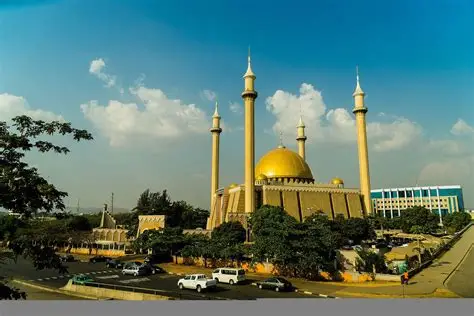
About 78 Ministries, Departments and Agencies, MDAs, of the Federal Government have allocated nearly ₦400 billion in the 2026 budget to projects including community halls, mosques, traditional rulers’ palaces, village markets and civic centres.
According to findings by The PUNCH, more than half of the allocation is also earmarked for projects such as the distribution of grains and motorcycles, support for community thrift societies, museums, mini stadia and tricycles, raising concerns over the developmental value of the spending.
The affected agencies include the Ministry of Defence Headquarters, Nigerian Air Force, Nigerian Defence Academy, Technical Aid Corps, Federal Ministry of Information and National Orientation, Federal Ministry of Industry, Trade and Investment and several research and training institutions.
Analysts have questioned the inclusion of the projects, arguing that the funds could have a greater impact if channelled into critical areas such as healthcare, education, security, roads, electricity and other essential infrastructure.
One cited example is the National Building and Road Research Institute, whose 2026 budget reportedly contains more than ₦4 billion for projects including village halls, markets, traditional rulers’ palaces, market stalls, multipurpose halls and mosque renovations in different states.
The National Productivity Centre also has allocations for projects outside its core mandate, including support for Ijaw musicians, construction of an Emir’s palace, Obas’ palaces and an abattoir, while the National Mathematical Centre is listed to fund the construction of a Sociology Department building at Ahmadu Bello University, Zaria.
Economist and former central banker, Chukwunonso Ihuma, blamed weak legislative oversight for the proliferation of such projects, alleging that lawmakers sometimes insert or expand budget items that have little connection with the mandates of the agencies involved.
He called for a return to zero based budgeting, where every expenditure must be justified from scratch, saying the Budget Office should have stronger powers to remove projects that do not serve clear national interests.
The concerns come amid broader questions over Nigeria’s fiscal capacity. President Bola Ahmed Tinubu signed the ₦68.32 trillion 2026 Appropriation Bill into law in April, while the implementation of the 2025 capital budget has also been extended to September 30, 2026.
Analysts say the overlapping budget cycles, limited revenue and growing debt service obligations make efficient allocation of public resources increasingly important.
They warned that spending scarce government funds on numerous fragmented and low impact projects could weaken fiscal discipline and reduce the resources available for large scale investments capable of improving economic growth and citizens’ welfare.










Leave a comment