


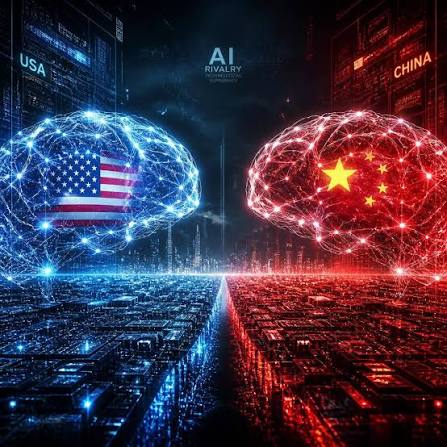
A senior White House technology adviser has accused Chinese artificial intelligence startup Moonshot AI of carrying out a “large scale” effort to steal capabilities from leading U.S. AI models, escalating Washington’s criticism of China’s rapidly advancing AI sector.
According to the BBC, Michael Kratsios, U.S. President Donald Trump’s Science and Technology Adviser, alleged that Moonshot AI used a technique known as distillation to extract knowledge from Anthropic’s advanced AI systems during the development of its newly launched Kimi K3 model.
Kratsios also claimed that Moonshot AI gained access to restricted Nvidia servers powered by the GB300 Grace Blackwell computing platform to train its models, despite U.S. export controls designed to prevent advanced AI chips from reaching China. He made the allegations in a post on social media but did not publicly provide evidence to support the claims.
The accusations came a day after U.S. Treasury Secretary Scott Bessent said Washington was examining whether Chinese AI companies had unlawfully copied the capabilities of American competitors. Bessent later warned that sanctions could be imposed on firms found to have engaged in what he described as “industrial scale distillation attacks.”
“We support open source AI and the innovation it unlocks. But open source is not open season on American intellectual property,” Bessent said in a statement shared on social media.
The Chinese government had not responded publicly to the latest allegations at the time of reporting. Beijing has previously maintained that China’s advances in artificial intelligence are the result of domestic innovation, sustained research and international cooperation.
The dispute comes as tensions between Washington and Beijing continue to grow over advanced technology, semiconductors and artificial intelligence ahead of an expected meeting between Donald Trump and Chinese President Xi Jinping in September.
Moonshot AI’s Kimi K3 model attracted international attention after its launch last week, with analysts suggesting it had narrowed the performance gap between Chinese and leading U.S. AI systems. The company has announced plans to release Kimi K3 as an open source model on July 27, allowing developers worldwide to download and customise it.
The allegations also follow earlier claims by Anthropic in June, when the U.S. AI company accused Chinese technology giant Alibaba of using distillation techniques to extract capabilities from its Claude AI models. Anthropic urged U.S. lawmakers to strengthen protections for American artificial intelligence technologies and impose tougher penalties for intellectual property theft.
The White House has previously pledged closer cooperation with U.S. AI developers to combat what it describes as organised foreign efforts to obtain proprietary American technology.










Leave a comment