


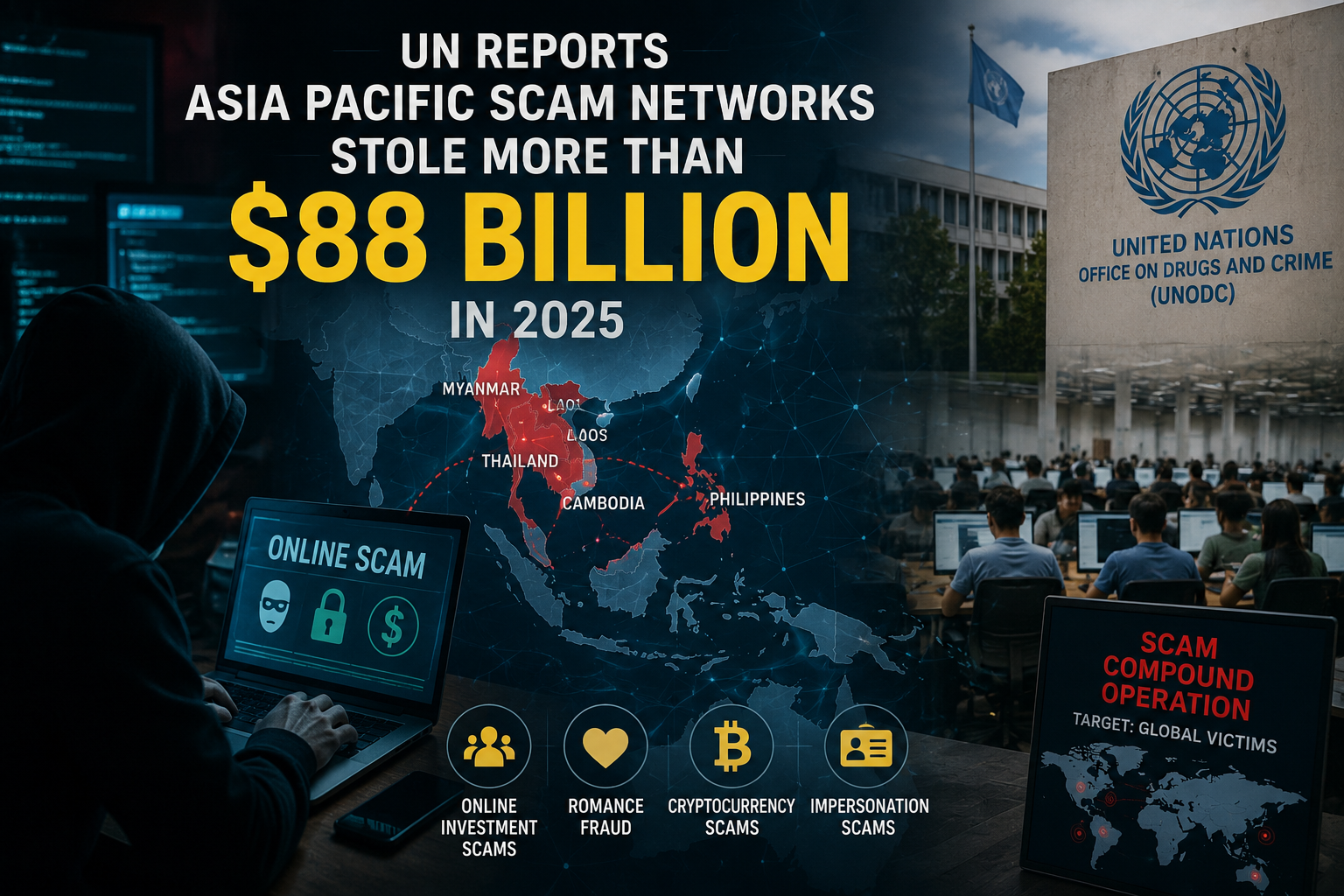
Criminal scam networks operating across the Asia Pacific region stole more than $88 billion from victims in 2025, according to a new United Nations report, highlighting the rapid expansion of transnational cyber fraud and organised crime.
The report found that online investment scams, romance fraud, cryptocurrency schemes and other forms of cyber enabled crime generated unprecedented illicit profits, with criminal syndicates increasingly relying on sophisticated technology, artificial intelligence and trafficked workers to target victims around the world.
The UNODC said scam compounds, many of them operating in parts of Myanmar, Cambodia, Laos and the Philippines, have evolved into highly organised criminal enterprises with operations stretching across Asia, Africa, Europe and the Americas. The agency warned that these networks continue to relocate and adapt in response to law enforcement crackdowns.
The report estimated that billions of dollars were lost through fraudulent cryptocurrency investments, fake online trading platforms, impersonation scams and romance scams, with victims often lured through social media and messaging applications before being persuaded to transfer large sums of money.
The United Nations also raised concerns about widespread human trafficking linked to the scam industry, saying thousands of people from dozens of countries have been deceived with fake job offers before being forced to work in heavily guarded scam centres under threats of violence and abuse.
UNODC urged governments to strengthen cross border cooperation, improve financial intelligence sharing and increase efforts to rescue trafficking victims while dismantling the criminal organisations behind the operations. It warned that without coordinated international action, cyber enabled fraud would continue to expand and pose an increasing threat to global financial security.
Law enforcement agencies across the region have stepped up joint operations in recent years, rescuing trafficking victims and shutting down several scam compounds. However, the United Nations said criminal groups remain highly resilient, quickly shifting operations to new jurisdictions and adopting emerging technologies to evade detection.










Leave a comment