


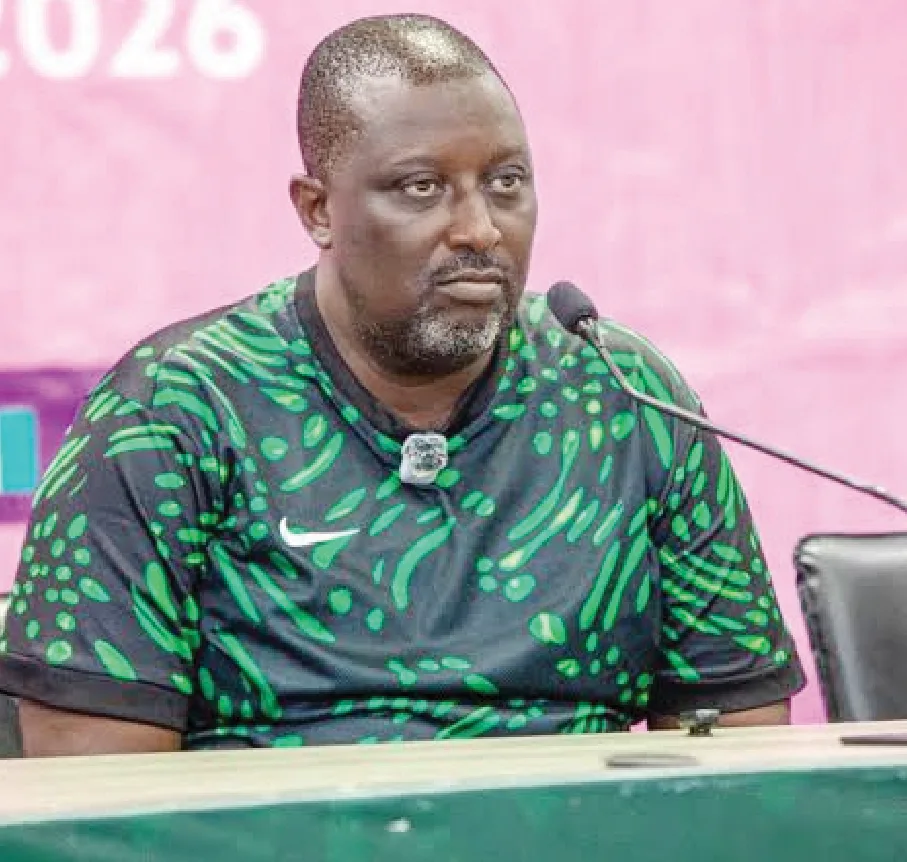
Akeem Ishola Busari has emerged as one of the prominent figures in Nigerian football following his historic achievement of guiding the country’s Under-17 women’s national team, the Flamingos, to their first-ever FIFA U-17 Women’s World Cup title.
Busari led the Nigerian girls to a 2-1 victory over Japan in the final of the 2026 FIFA U-17 Women’s World Cup in Morocco on Saturday, November 7, making Nigeria the first African country to win the competition.
His achievement came just seven months after the Nigeria Football Federation appointed him as head coach of the Flamingos on April 2, 2026.
He replaced Bankole Olowookere, who previously guided the team to a bronze medal at the 2022 edition of the tournament in India.
Before his national team appointment, Busari was the head coach of Pacesetter Queens Football Club in Ibadan, Oyo State.
He began his formal coaching education at the National Institute for Sports in Lagos, where he obtained his initial coaching qualification in 1999.
According to the Director-General of the institute, Philip Shaibu, Busari later returned to undertake higher coaching programmes between 2003 and 2006, receiving his final coaching certificates in October 2006.
The coach also holds a Confederation of African Football A coaching licence and has accumulated more than three decades of experience working with football teams.
His coaching career includes spells with Shooting Stars, Gateway United, JSP FC and Bayelsa Queens, as well as experience in the Republic of Benin.
During the 2008/2009 season, he played a role in helping Shooting Stars secure promotion to the Nigerian top flight. He also won several State FA Cup titles with Gateway United and Shooting Stars.
In 2023, he guided JSP FC to promotion in the Benin Championship League and subsequently served as Technical Director of Bayelsa Queens.
Road to historic victory
Following his appointment, Busari’s immediate responsibility was to guide the Flamingos through the African qualifying series.
Nigeria secured qualification after defeating the Benin Republic 8-5 on aggregate, winning the first leg 3-2 before recording a 5-3 victory in the return encounter.
At the World Cup, the Flamingos suffered a 2-1 defeat to Poland in their opening match but recovered with victories over Puerto Rico and defending champions North Korea to advance to the knockout stage.
They subsequently defeated Mexico 2-1 in the round of 16, edged Venezuela 1-0 in the quarter-finals and overcame Brazil 3-1 in the semi-finals.
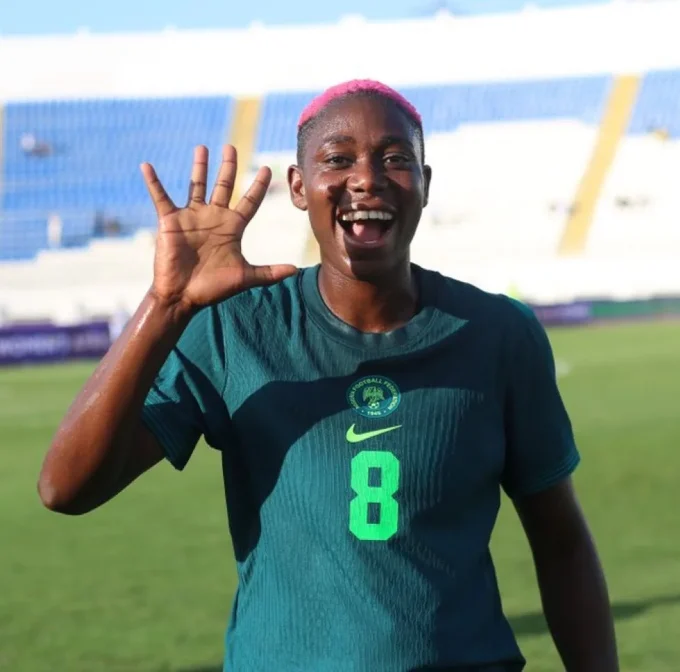
Against Japan in the final, Awawu Bashiru opened the scoring in the 39th minute before Oluebube Umejiaku doubled Nigeria’s advantage shortly after the restart.
Japan later reduced the deficit, but the Nigerian girls held on to secure the historic 2-1 victory.
Speaking about his coaching philosophy, Busari emphasised discipline, character, attitude and merit in selecting players.
He explained that players must demonstrate the right mentality and commitment to earn playing time, regardless of their individual reputation.
His approach was reflected in the semi-final against Brazil, when Awawu Bashiru was introduced into the starting lineup and responded by scoring twice.
Busari’s achievement has attracted congratulations from football administrators and coaching associations, with the Football Coaches Association of Africa, Nigeria, describing the victory as a significant milestone for indigenous coaching development.
The triumph has also placed Nigeria at the forefront of African women’s youth football, following the country’s historic emergence as the first African winner of the FIFA U-17 Women’s World Cup.
ALSO READ:https://vistaonenews.com/2026/11/05/formula-1-legend-alan-jones-dies-at-80-after-short-illness/









Leave a comment