


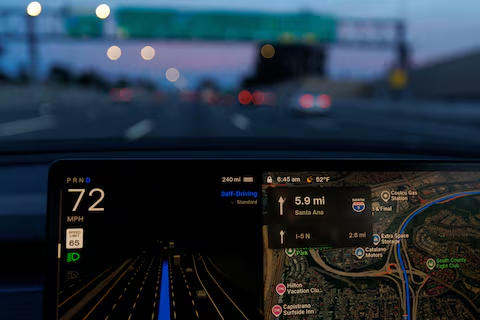
Tesla is under scrutiny in South Korea following allegations that it sold its Full Self-Driving (FSD) software to thousands of customers whose vehicles were not legally approved to use the technology.
The controversy centres on the difference between Tesla vehicles manufactured in the United States and those produced in China. While certain US-made models qualify for FSD use under existing regulatory arrangements, most China-made vehicles sold in South Korea remain ineligible.
A consumer advocacy organisation, Citizens United for Consumer Sovereignty, alleges that Tesla continued promoting the software despite these restrictions, leaving many customers paying for a feature they could not access.
Figures submitted by Tesla to South Korea’s National Assembly indicate that 99% of new Tesla vehicles sold in the country last year could not legally use FSD.
The company previously offered the software for a one-time payment of 9.043 million won (about $6,726) before introducing a monthly subscription priced at 150,000 won.
The advocacy group intends to ask the Korea Fair Trade Commission to suspend FSD marketing for ineligible vehicles and consider administrative penalties against Tesla Korea.
South Korean regulators are already investigating the company’s advertising practices. The transport ministry has also questioned whether the technology meets local road-safety requirements.
Tesla’s FSD system, despite its name, does not provide fully autonomous driving. It requires continuous driver supervision and does not remove the driver’s responsibility for vehicle control.
The case highlights the growing challenge of introducing advanced driver-assistance technology across international markets, where vehicle certification, safety regulations and consumer expectations do not always align.


Leave a comment