


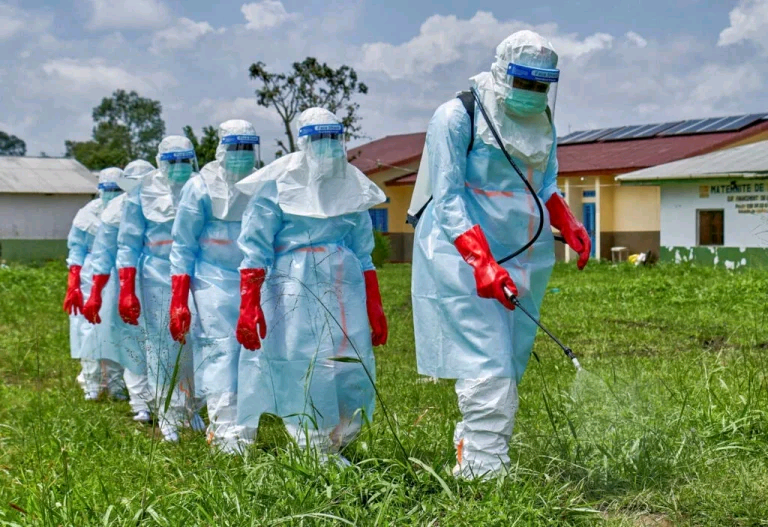
Nigeria’s Federal Government and state governments have intensified disease surveillance, contact tracing and emergency preparedness following confirmation of an imported case of the Bundibugyo strain of Ebola virus disease in Abuja.
According to a report published by PUNCH on October 22, 2026, the infected diplomat’s condition has deteriorated into multiple organ failure, raising concerns among health authorities as they work to prevent further transmission.
The Nigeria Centre for Disease Control and Prevention confirmed the strain after conducting three levels of molecular testing, according to Olajumoke Babatunde, the agency’s Director of Public Health Laboratory Service.
The patient’s identity and nationality have not been publicly disclosed in the report.
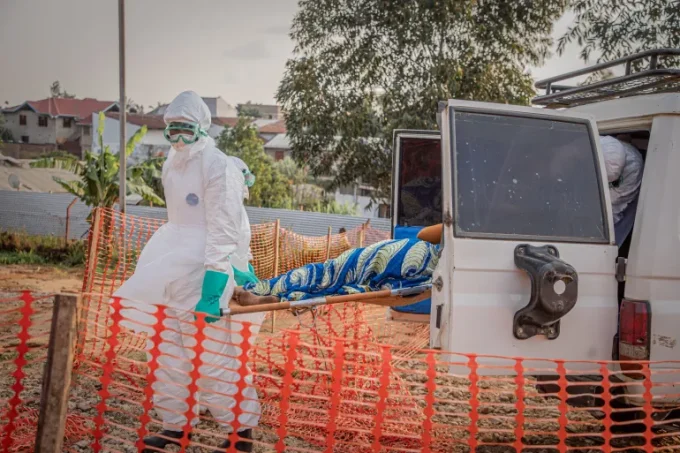
The Federal Ministry of Health and Social Welfare confirmed Nigeria’s first Ebola case since 2014 on October 20, following laboratory tests on a woman who had recently travelled to Nigeria from Uganda. The patient was admitted to a private hospital in the Federal Capital Territory before the infection was confirmed.
FG activates containment measures
The Coordinating Minister of Health and Social Welfare, Professor Muhammad Ali Pate, said the Federal Government was collaborating with Uganda and other relevant authorities to contain the infection and prevent it from spreading into the wider population.
Pate urged Nigerians to remain vigilant and avoid panic, stressing that the country had successfully managed an Ebola outbreak in 2014.
He said the NCDC had activated its incident management system, with officials working to identify and monitor people who might have been exposed to the virus.
The Federal Government also pledged to provide regular updates as more information became available.
Contacts placed under monitoring
The Minister of Aviation and Aerospace Development, Festus Keyamo, directed aviation authorities to place 46 people linked to the case on a no-fly list for 21 days.
The group comprises 44 people who reportedly had contact with the patient at the hospital after she developed symptoms and two domestic staff members.
Authorities are also strengthening surveillance at international airports through temperature screening, travel history checks and digital health declarations to identify potential cases.
The Federal Government has called on healthcare facilities nationwide to remain alert, promptly isolate suspected cases and report them to public health authorities.
States intensify preparedness
Several state governments have activated additional measures to prevent the possible spread of the virus.
Anambra State reported that it had monitored 40 people of interest, with 33 completing their monitoring period and being cleared, while seven remained under active follow-up as of October 20.
Niger State has placed its health system on high alert, activated emergency operations and continued preparations for an isolation centre.
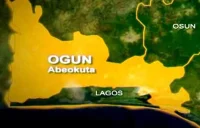
Ogun State, meanwhile, is tracing 111 people considered to have potentially relevant links to the case.
The measures are intended to identify possible infections early and prevent onward transmission.
Senate demands stronger screening
The Senate has called for mandatory health screening at international airports, seaports and designated land borders, alongside emergency funding to strengthen disease surveillance and prepare treatment and isolation centres across the country.
The World Health Organisation has urged countries in the region to maintain heightened vigilance, strengthen laboratory capacity and ensure that healthcare workers have adequate protective equipment.
Ebola can spread through direct contact with the blood and other bodily fluids of infected people or contaminated materials. Health authorities have therefore urged Nigerians to follow official public health advice, cooperate with contact-tracing teams and avoid spreading unverified information.
The immediate priority remains containing the imported case, monitoring identified contacts and preventing further infections.








Leave a comment