


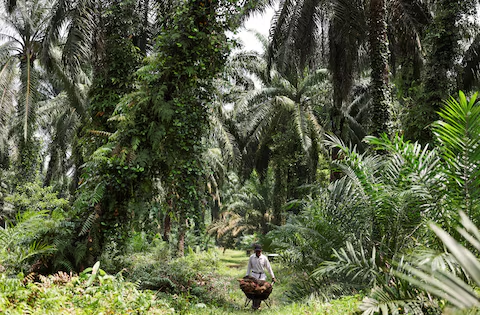
Indonesia and Malaysia, the world’s leading palm oil producers, are pursuing different approaches to environmental standards as the industry faces growing pressure to demonstrate that its products are not linked to deforestation.
Indonesia, the largest producer, is pushing for greater coordination around standards developed by producing countries, arguing that strict sustainability requirements can place smallholder farmers at a disadvantage. Malaysia, meanwhile, has introduced a national certification system designed to improve traceability and demonstrate compliance with international market requirements.
The debate has intensified with the European Union’s deforestation regulation, which requires companies to establish that covered commodities, including palm oil, have not been produced on land deforested after December 2020. Businesses must also provide information tracing products back to their production areas.
Smallholders are particularly vulnerable to the cost and administrative demands of compliance. They account for a substantial share of palm oil production but may lack the digital records, land documentation and technical support needed to meet buyers’ requirements.
Malaysia produces roughly a quarter of global palm oil supplies, while Indonesia dominates the market. Both countries depend on the commodity for export earnings, employment and rural livelihoods.
Efforts to strengthen sustainability standards could help maintain access to international markets, but disagreements remain over how compliance should be measured and who should bear its costs.
The challenge for both governments is to protect the industry’s commercial competitiveness while reducing forest destruction and ensuring smaller producers are not excluded from supply chains.
The outcome could influence global vegetable oil trade, agricultural investment and the future of sustainable commodity production.






Leave a comment