


The United Nations Development Programme (UNDP) has launched two initiatives to attract private investment and create jobs in developing countries as international development assistance declines and economic pressures intensify.
Announced on Tuesday, October 13, 2026, during the annual meetings of the International Monetary Fund and World Bank in Bangkok, the initiatives aim to help governments improve investment conditions, develop viable projects and connect workers with employment opportunities.
The programmes will receive support through expanded partnerships with the World Bank Group, the European Investment Bank and the European Bank for Reconstruction and Development. UNDP is also working with private investors and financial institutions to mobilise funding for projects that can support economic growth.
The initiative comes as developing countries face rising energy costs, expensive borrowing and pressure on government finances. The conflict in the Middle East has increased energy costs, while severe weather risks threaten food production and household incomes.
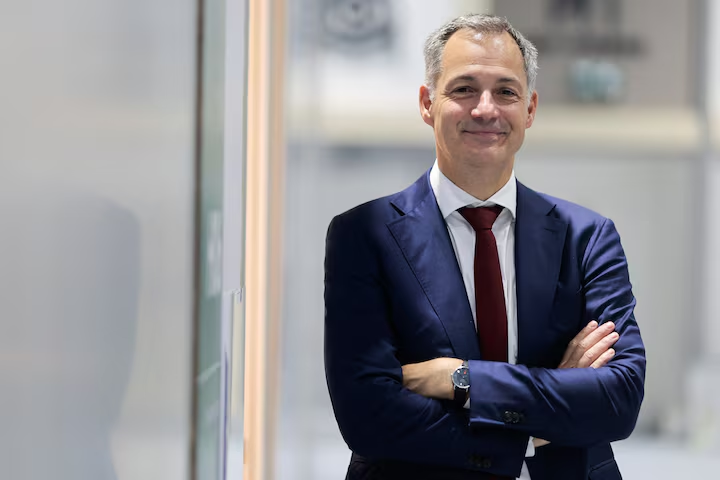
UNDP Administrator Alexander De Croo warned that prolonged economic shocks could leave vulnerable countries struggling to finance essential services and development projects.
The employment challenge is particularly pressing. An estimated 1.2 billion young people are expected to enter the workforce over the next decade, while only about 400 million jobs are projected to become available.
Pilot programmes are already underway in Nepal, Yemen, Haiti, Lebanon and Ghana, focusing on reforms and investment opportunities that could encourage businesses to expand and employ more workers.
UNDP is also working with Italian insurer Generali to improve insurance coverage in vulnerable markets. Natural disasters caused an estimated $65 billion in economic losses across Asia in 2025, but only $5 billion was insured.
The initiatives reflect a broader shift towards mobilising private capital as traditional development funding becomes less reliable.







Leave a comment