


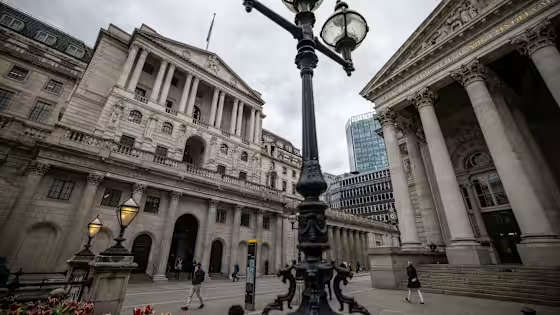
The Bank of England has kept its benchmark interest rate at 3.75% but signalled that borrowing costs could rise as policymakers respond to renewed inflation pressures and adjust the way they manage the central bank’s holdings of government bonds.
The decision leaves the Bank Rate unchanged for now, while the central bank indicated that further tightening could become necessary. The signal comes as policymakers assess the persistence of inflation and the broader outlook for the UK economy.
Alongside the rate decision, the Bank is overhauling its programme for reducing its stock of government bonds, known as quantitative tightening. The changes are significant because the pace at which the central bank sells or allows government debt to mature can influence financial-market conditions and borrowing costs.
The prospect of higher interest rates is likely to attract close attention from households, businesses and investors. Higher rates generally increase the cost of mortgages and corporate borrowing, while potentially improving returns on savings and some fixed-income investments.
For the UK economy, the policy challenge is balancing inflation control with economic growth. Keeping rates higher for longer can help limit price pressures, but it can also weigh on consumer spending, business investment and housing activity.
The latest signal comes after the Bank had previously been moving gradually towards lower borrowing costs as inflation pressures eased. The possibility of renewed increases suggests policymakers remain concerned that inflation may not return sustainably to target without additional restraint.
Changes to the Bank’s gilt-sale programme will also be closely watched by financial markets. Government bonds are a major component of the UK financial system, and adjustments to the central bank’s balance sheet can affect bond yields, liquidity and the cost of financing for the government and private sector.
Investors will therefore be paying close attention to future inflation data, wage growth and economic activity for indications of how the Bank may act at subsequent meetings.
For businesses, a renewed period of higher interest rates could increase financing costs at a time when many companies are already dealing with elevated operating expenses and uncertain demand. Smaller businesses that rely heavily on bank lending could be particularly sensitive to changes in borrowing conditions.
The policy shift also has implications for the UK government’s finances because higher gilt yields can increase the cost of issuing and refinancing public debt.
The Bank’s latest stance reinforces the importance of inflation developments in determining the direction of UK monetary policy. While rates remain unchanged at 3.75%, the warning that borrowing costs may rise adds a new layer of uncertainty for households, companies and financial markets.











Leave a comment