


By Benson Daniel
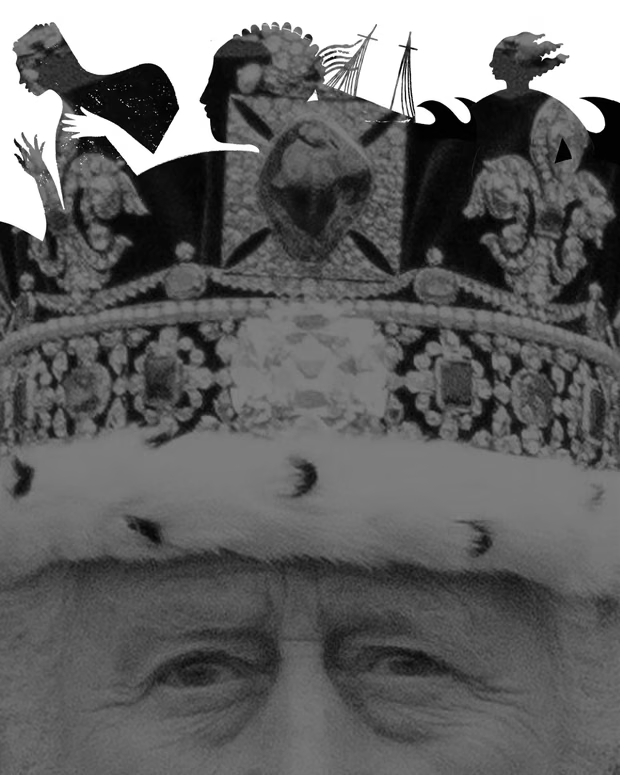
New historical research has shed further light on the British monarchy’s involvement in the transatlantic slave trade, revealing evidence that enslaved Africans were branded with a symbol representing the royal crown.
The discovery comes from research into Britain’s slave-trading companies and their links to successive monarchs, members of the political establishment and influential investors.
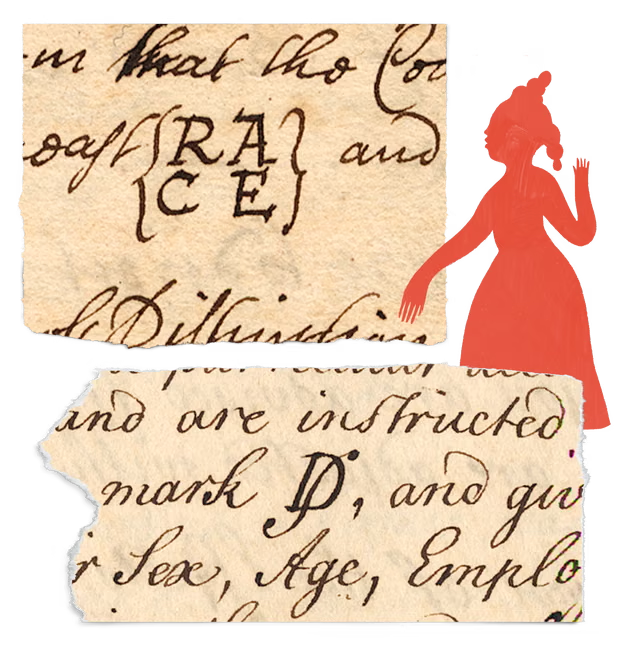
Historian Dr Nicholas Radburn uncovered a letter in the archives of the South Sea Company showing that its directors instructed agents to brand enslaved Africans with a crown-shaped mark.
The letter directed agents to heat the branding instrument until it was red hot before marking enslaved people on the shoulder. The company’s directors argued that the branding would distinguish the people they had enslaved from others.
The evidence has provided a disturbing illustration of the extent to which the trafficking of Africans was organised and administered by powerful institutions within Britain.
The South Sea Company was backed by the British Crown and became heavily involved in transporting enslaved Africans to the Americas. Historical records indicate that thousands of Africans were trafficked through the company’s operations during the 18th century.
The Royal African Company, another major British slave-trading organisation, was also closely connected to the monarchy. King Charles II helped establish the company, while his brother, James, Duke of York, who later became King James II, served as its governor and was a major shareholder.
The company trafficked large numbers of African men, women and children to plantations in the Caribbean and elsewhere.
Other members of the royal family were also linked to the trade. Queen Anne invested in the South Sea Company and awarded it a contract to supply enslaved Africans to Spanish territories in the Americas.
Between 1714 and 1740, the South Sea Company transported more than 43,000 African captives from West Africa and Madagascar to the Caribbean and Spanish America. Thousands died during the voyages under extremely harsh conditions.
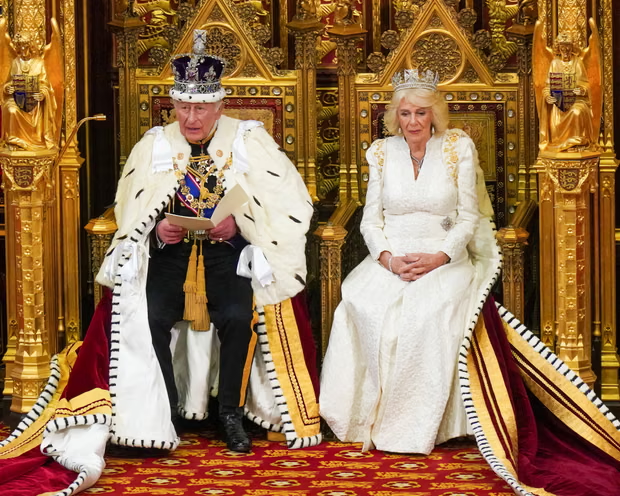
Researchers say the newly documented evidence reinforces the argument that slavery was not simply the work of individual merchants but was supported by commercial, political and royal institutions.
The historical revelations are likely to intensify calls for the British monarchy to acknowledge its role in the slave trade and consider how Britain’s historical involvement should be addressed.
King Charles has previously expressed sorrow over the suffering caused by slavery and has supported further academic research into the monarchy’s historical connections to the trade. However, the British government has not issued a formal apology for Britain’s role or agreed to reparations.
The issue remains particularly significant for African and Caribbean countries, where the legacy of the transatlantic slave trade continues to influence debates over historical responsibility, inequality and reparations.
The latest research adds to growing efforts by historians to document the individuals and institutions that benefited from the trafficking and enslavement of Africans and to establish a clearer historical record of Britain’s role in the system.











Leave a comment