


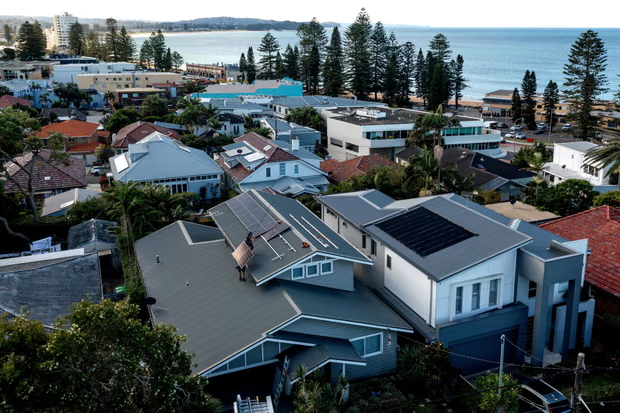
By Benson Daniel
Home loan applications in Australia have fallen by 15 per cent since the federal budget in May, highlighting growing pressure on the housing market as higher interest rates, changes to property tax rules and weaker affordability weigh on prospective buyers.
The decline was reported by Commonwealth Bank, Australia’s largest home lender, which said mortgage application volumes had dropped significantly since the budget introduced changes affecting property investors.
The bank said the downturn had become particularly pronounced among investors, with investor home loan applications falling by 28 per cent since May. Applications from owner occupiers were down by about 9 per cent over the same period.
The figures point to a notable cooling in housing demand after several interest rate increases by the Reserve Bank of Australia and changes to the tax treatment of investment properties.
CBA chief executive Matt Comyn said housing activity had softened from a high level, although application volumes appeared to have stabilised in recent weeks.
The slowdown has raised concerns across Australia’s housing and construction industries, where sustained weakness in new lending could affect property transactions, development activity and the supply of new homes.
The federal budget changes have been a particular source of uncertainty for property investors. The changes altered long standing tax arrangements, including measures affecting negative gearing and capital gains tax, prompting some investors to reconsider planned purchases.
Higher borrowing costs have added to the pressure. Australian households have faced a series of interest rate increases, making mortgages more expensive and reducing the amount many prospective buyers can afford to borrow.
CBA’s figures also show that the decline in mortgage demand is not isolated to a single institution. Other major Australian banks have reported falls in applications, suggesting that the broader housing market is experiencing a slowdown rather than a temporary shift in lending between banks.
Westpac, for instance, recorded a 20 per cent decline in home loan applications from May, while National Australia Bank reported a 15 per cent fall from the end of March.
Despite the weaker lending figures, CBA delivered a record cash profit of about A$10.98bn for the financial year, representing a 7 per cent increase. The result demonstrated that the immediate effect of weaker housing demand has not yet translated into a major deterioration in the bank’s overall earnings.
However, analysts are increasingly watching the housing market as a potential source of pressure on future bank growth. Mortgage lending remains a major part of the Australian banking system, meaning a prolonged reduction in applications could eventually slow credit growth and affect revenue.
There are also concerns about what weaker demand could mean for housing supply. A prolonged decline in lending could discourage developers and builders from commencing projects, potentially worsening Australia’s existing shortage of housing.
At the same time, falling applications could eventually help cool property prices by reducing competition among buyers. Recent housing data has already pointed to weaker conditions in parts of the market, adding to expectations that the rapid price growth seen earlier could moderate.
For the Reserve Bank, the developments present a complicated picture. Higher interest rates are intended to restrain demand and inflation, but policymakers must also consider the effect of tighter monetary conditions on households, businesses and the housing market.
CBA’s assessment that applications have begun to stabilise offers some reassurance that the sharpest part of the downturn may have passed. However, lending remains well below earlier levels, particularly among investors.
The direction of Australia’s housing market in the coming months will therefore depend heavily on interest rates, household confidence, tax policy and the broader economic outlook.
For banks, builders, investors and prospective homeowners, the 15 per cent decline is another indication that Australia’s property market has entered a more cautious phase.











Leave a comment