


By Benson Daniel
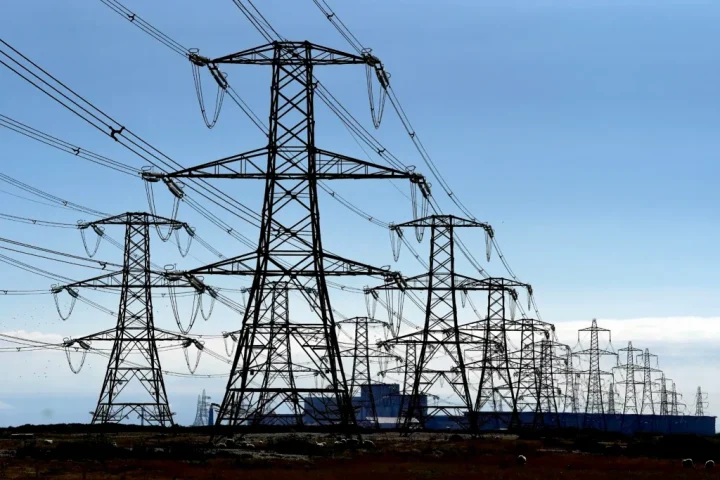
The Federal Government’s decision to tighten sanctions against electricity operators has renewed concerns about unresolved weaknesses in Nigeria’s power sector privatisation, with industry experts questioning whether penalties alone can fix the problems affecting the national grid.
The government has warned power generating companies that fail to comply with grid requirements that they could face sanctions, including possible disconnection from the system.
The tougher stance comes amid continuing concerns over grid stability, inadequate generation, transmission constraints and the inability of distribution companies to deliver enough electricity to consumers.
Energy experts say the latest enforcement measures may expose a deeper problem within the structure created after the power sector was privatised in 2013.
They argue that while sanctions are necessary to enforce discipline, the government must also address the commercial and technical weaknesses that have prevented the sector from becoming financially sustainable.
Nigeria’s electricity market remains heavily dependent on a fragile chain linking generation companies, the transmission network and distribution companies. A weakness at any point in that chain can quickly affect the amount of electricity ultimately delivered to homes and businesses.
The transmission network, which remains under government control, has also continued to face limitations in moving available generation to areas where demand is highest.
At the distribution end, inadequate infrastructure, technical losses, electricity theft, metering gaps and weak revenue collection continue to affect the ability of DisCos to invest in their networks.
Experts say these challenges cannot be solved simply by imposing penalties on individual operators when the wider market structure continues to suffer from liquidity problems and insufficient investment.
The financial health of the sector remains a major concern because operators need predictable revenue to maintain infrastructure, replace ageing equipment and expand capacity.
Where payments across the electricity value chain are delayed or inadequate, companies have less capacity to fund the investments required to improve service.
The situation has also complicated efforts to attract new private capital into the industry. Potential investors are likely to examine not only the size of Nigeria’s electricity market but also the reliability of the regulatory framework, payment systems and prospects for recovering investments.
The government has in recent years introduced several reforms aimed at improving the electricity market, including changes that give states greater room to participate in electricity generation and distribution.
Industry stakeholders believe such reforms could help reduce pressure on the national grid if properly implemented, particularly through decentralised power systems and greater use of renewable energy and other local generation sources.
However, they caution that decentralisation should complement efforts to strengthen the existing grid rather than become a substitute for fixing its underlying problems.
The latest sanctions debate therefore goes beyond the question of whether operators should be punished for noncompliance. It also raises questions about whether the current market structure provides sufficient incentives for companies to invest, perform and remain financially viable.
For consumers, the consequences of the sector’s weaknesses remain visible in frequent outages and the heavy reliance on generators and other alternative sources of electricity.
Businesses face additional costs when they have to provide their own power, while households are forced to divert more income towards fuel and other energy alternatives.
Experts say the government must therefore combine enforcement with deeper reforms capable of improving investment, accountability and coordination across the electricity value chain.
Without such measures, they warn, sanctions may address individual breaches without resolving the structural problems that have continued to hold back the sector more than a decade after privatisation.
The government’s challenge is now to ensure that regulatory enforcement becomes part of a broader strategy that improves reliability, strengthens market discipline and creates an electricity industry capable of supporting Nigeria’s economic ambitions.










Leave a comment