


By Benson Daniel
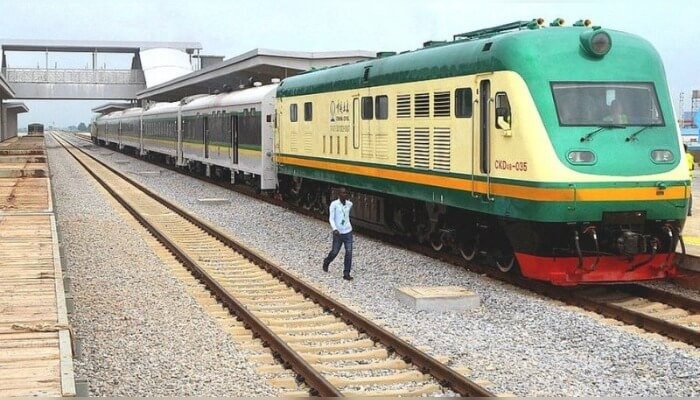
The Federal Government is planning a high speed rail connection between Lagos and Maiduguri as part of a wider effort to give Nigerians more options for moving across the country.
The proposed line would link Lekki in Lagos with Maiduguri, Borno State, with trains expected to operate at speeds of up to 360 kilometres per hour.
The Permanent Secretary of the Ministry of Transportation, Olufunso Adebiyi, disclosed the plan at the 19th National Council on Transportation, where government officials and industry stakeholders are examining ways to build a more integrated transport system.
Adebiyi said the proposed railway would form part of a broader network linking road, rail, air and water transportation.
The idea is to make long distance travel less dependent on Nigeria’s roads, which carry a large share of passenger and freight traffic and are frequently affected by congestion, accidents and poor road conditions.
At 360 kilometres per hour, the proposed service would represent a major change in the way Nigerians travel between distant cities.
Adebiyi used the example of a journey between Abuja and Lagos to illustrate the potential impact of faster rail travel. If such a service could complete the journey within a few hours, he argued, many travellers would have little reason to undertake the trip by road.
The government has not yet disclosed the estimated cost of the Lagos-Maiduguri project, construction schedule or expected completion date.
For now, the announcement is part of a much larger railway expansion programme already underway across the country.
Several corridors, including Lagos-Ibadan, Abuja-Kaduna, Warri-Itakpe and Port Harcourt-Aba, are already operational, while construction or rehabilitation work continues on other routes.
The Kaduna-Zaria-Kano line is nearing completion and is expected to commence operations by December, according to the transportation ministry. Work is also progressing on the Kaduna-Daura-Katsina, Katsina-Jibia-Maradi and Kano-Dutse corridors.
The government is also looking beyond conventional intercity rail.
Light rail projects have been approved for Lagos and Kano, with plans to extend similar systems to other state capitals. The objective is to take some pressure off roads while providing commuters with alternative ways to move within major urban centres.
There is an economic argument behind the expansion as well.
A more reliable rail network could reduce the cost of transporting goods, shorten delivery times and take some heavy duty vehicles off the roads. For manufacturers, farmers and traders, cheaper and more predictable movement of goods can make a noticeable difference to the cost of doing business.
Passenger travel could also benefit if rail becomes a realistic alternative to long road journeys.
But the scale of the proposed Lagos-Maiduguri connection means the project would require substantial planning, financing and technical coordination before construction can begin.
High speed rail requires dedicated infrastructure, specialised signalling systems, reliable power and strict safety standards. Maintaining those systems across such a long corridor would be another major undertaking.
The government is therefore pursuing the rail ambition alongside wider reforms in the transportation sector.
Adebiyi said the administration wants road, rail, maritime and air transport to work as parts of one system rather than as separate networks.
That approach is also reflected in plans for standardised bus terminals, a national transport data bank and stronger regulation of commercial transport operators.
For Nigeria, the bigger ambition is clear: make it possible for people and goods to move across the country more quickly, safely and efficiently.
The proposed Lagos-Maiduguri high speed line is perhaps the most ambitious expression of that vision yet.
Whether it eventually moves from an announcement to construction will depend on the financing, engineering plans and implementation strategy that follow.
For now, the Federal Government has put a 360km/h railway linking Nigeria’s commercial capital to the far northeast on the table, signalling a push towards a transport network built for a much more connected economy.








Leave a comment