


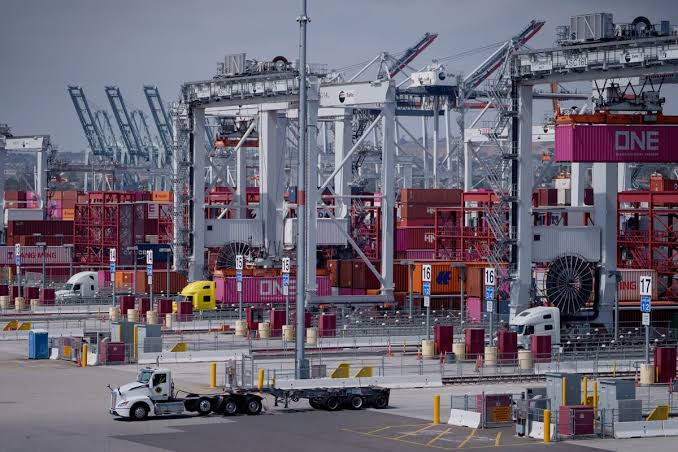
The Port of Los Angeles recorded its second-highest cargo volume for July, driven by strong demand for consumer products as well as equipment for manufacturing and data center construction, its executive director Gene Seroka said on Tuesday.
The busiest port in the United States processed 960,464 twenty foot equivalent units (TEUs) of container cargo last month, including 499,552 TEUs of imports, according to port data.
Seroka said the strong demand was expected to continue into August, with the port projecting more than 900,000 container units for the month.
“Based on what we’re seeing today, we expect to handle more than 900,000 container units in the month of August,” Seroka told journalists.
The neighboring Port of Long Beach also reported a strong July, handling 928,508 TEUs, its second-busiest July on record, including 467,461 TEUs of imports.
Container imports are closely monitored by economists and investors as an early indicator of U.S. economic activity.
Seroka and industry experts said the U.S. import peak season arrived earlier than usual this year, with many retailers bringing in holiday merchandise ahead of schedule. Some businesses also accelerated shipments amid uncertainty surrounding changes to U.S. tariffs.
However, Seroka expects import volumes to gradually moderate later in the year, in line with forecasts from the National Retail Federation.
AI Boom Reshapes Shipping Demand
Industry executives say the composition of container cargo is increasingly changing as countries invest heavily in electricity infrastructure and data centers to support the rapid expansion of artificial intelligence.
Vincent Clerc, CEO of container shipping giant Maersk, said the industry was increasingly transporting products linked to electrification and expanding power capacity rather than relying primarily on traditional retail merchandise.
Those products include batteries, solar panel components, wind turbine equipment, industrial turbines and cooling systems for data centers.
The shift reflects growing demand for infrastructure needed to support the global AI boom and the expansion of electricity networks.











Leave a comment