


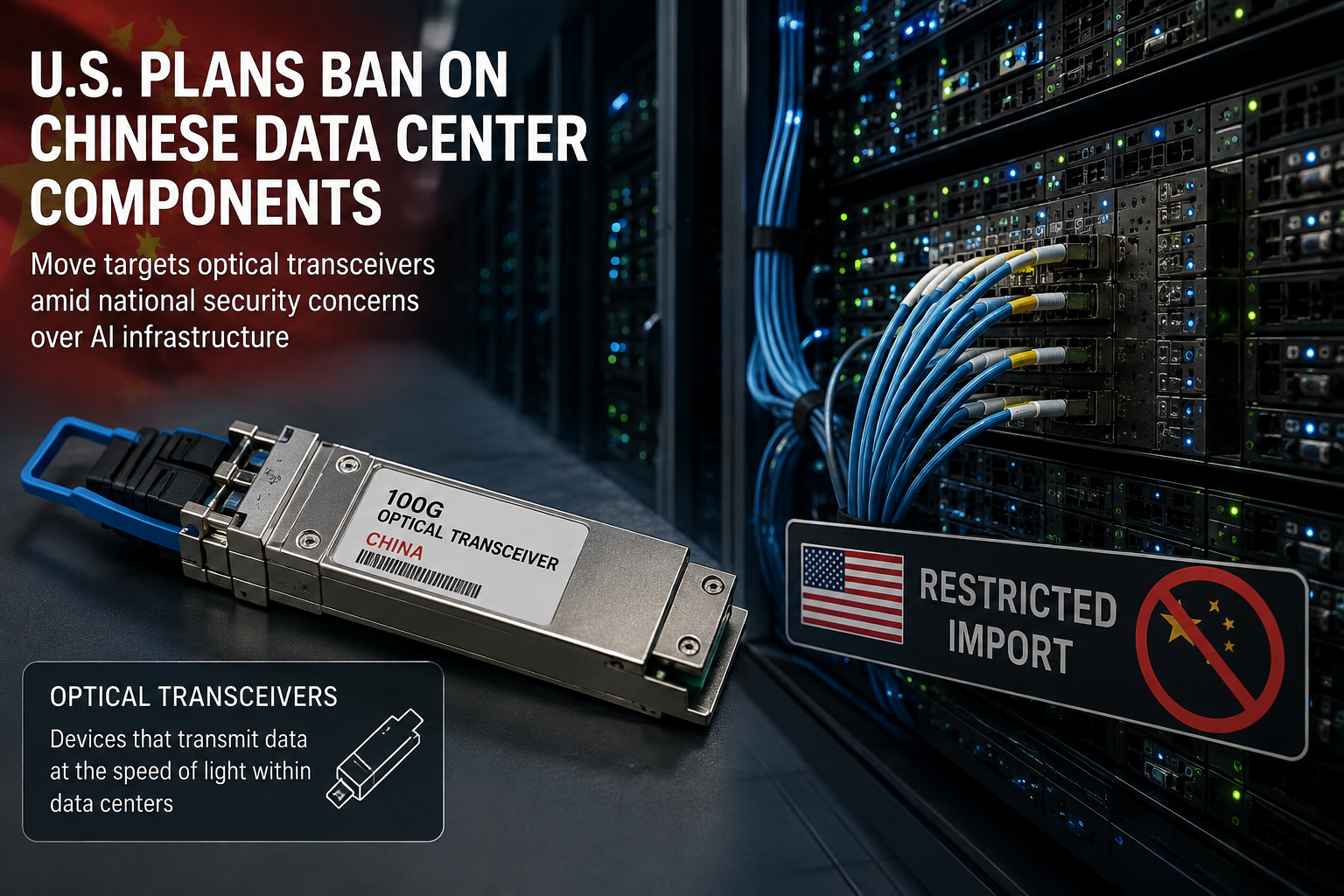
The Trump administration is preparing new restrictions that would ban imports of certain Chinese-made data center components, as Washington moves to strengthen the security of infrastructure supporting the rapid expansion of artificial intelligence.
The Federal Communications Commission (FCC) is drafting rules that would prohibit imports of new models of Chinese optical transceivers, devices that transmit data through fibre optic cables inside data centres. The proposal is expected to be published later this year and, if approved, would take effect immediately.
Officials believe the measure would help reduce the risk of cyber espionage, malware installation and potential disruption of critical U.S. data centre operations that power AI development. Although the proposal is still under review and could be modified or withdrawn, it reflects growing concern in Washington over China’s role in advanced technology supply chains.
“As the data center buildout scales up, you want to make sure the data center supply chain is secure from the get-go,” said AI policy expert Divyansh Kaushik of Beacon Global Strategies.
The Chinese Embassy in Washington criticised the proposal, urging the United States to stop targeting Chinese technology firms and warning that Beijing would take “all necessary measures” if its interests were harmed.
The proposed restrictions are expected to affect Zhongji Innolight, one of the world’s largest manufacturers of optical transceivers. The company was added to the U.S. Pentagon’s list of firms alleged to have links to the Chinese military earlier this year. Industry analysts estimate the company controls roughly 27% of the global data centre transceiver market.
The move could also increase costs for major U.S. cloud computing providers, including Amazon Web Services (AWS), by forcing them to source equipment from alternative suppliers such as Coherent and Lumentum, which currently lack the production scale of their Chinese competitors.
The FCC has previously introduced similar restrictions on Chinese made drones, routers, robots and power inverters through its national security Covered List, which bars equipment considered to pose security risks from entering the U.S. market.
The planned action follows years of U.S. concerns over alleged intellectual property theft and cyber security threats linked to Chinese technology companies. While the Trump administration eased some trade tensions with Beijing following last year’s agreement on rare earth exports, it continues to tighten restrictions on technology viewed as strategically sensitive.






Leave a comment