


By Benson Daniel
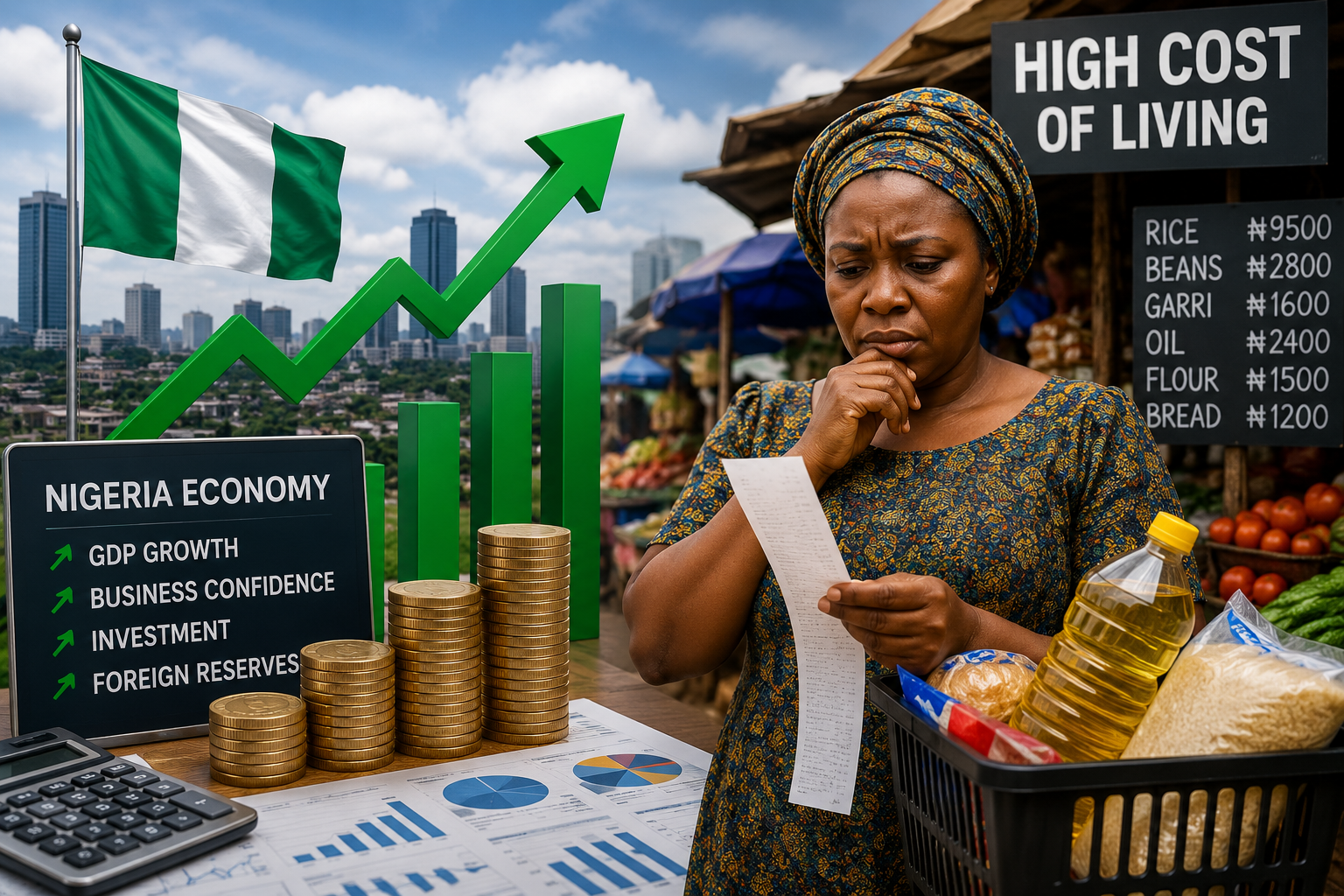
Nigeria’s economy is showing renewed signs of recovery, but many households say the improvement has yet to translate into meaningful relief from the rising cost of living, underscoring the widening gap between macroeconomic gains and everyday realities.
Recent economic indicators suggest that key sectors, including agriculture, manufacturing, telecommunications and financial services, are gradually regaining momentum following months of policy reforms and improved investor confidence. Analysts say the rebound reflects stronger business activity, increased foreign exchange stability and sustained government efforts to stimulate economic growth.
Despite these positive developments, many Nigerians continue to grapple with high food prices, transportation costs and inflationary pressures that have significantly eroded household purchasing power. Families across the country report that essential goods and services remain beyond the reach of many low and middle income earners, forcing households to cut spending and adjust their lifestyles.
Economic experts note that while growth is an encouraging signal for investors and businesses, the full benefits of recovery often take time to reach ordinary citizens. They stress that stronger economic performance must be accompanied by policies that create jobs, improve incomes and reduce the cost of living if households are to experience tangible improvements in their welfare.
Business operators also believe that easing inflation, improving access to affordable credit and supporting local production will be critical to sustaining the recovery. They argue that increased investment in infrastructure, agriculture and small and medium sized enterprises will help expand employment opportunities and stimulate consumer spending.
As Nigeria’s economy continues on the path to recovery, stakeholders maintain that inclusive growth should remain the priority. They say lasting economic progress will ultimately be measured not only by stronger national economic indicators but also by improved living standards, greater purchasing power and renewed confidence among households across the country.











Leave a comment