


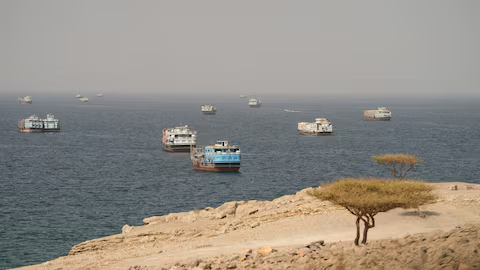
The danger surrounding the Strait of Hormuz is becoming harder for the global energy market to ignore. Oil tankers are coming under attack, vessels are being damaged, oil spills have reached coastlines and shipping companies face growing uncertainty over whether it is safe to move through one of the world’s most important trade routes.
On November 12, Iran’s Revolutionary Guards Navy said two oil supertankers had been disabled by major explosions after ignoring warnings against using what Tehran described as an unauthorised route through the strait. Iranian state media subsequently reported that the vessels had struck naval mines.
Those claims have not been independently established. However, they have added to a growing record of maritime incidents that is already putting pressure on shipping operators, energy companies and governments.
The concern extends far beyond the vessels involved. The Strait of Hormuz connects the Persian Gulf to the Gulf of Oman and the wider international shipping network. A prolonged disruption could affect the movement of crude oil, petroleum products and liquefied natural gas, with consequences for energy prices, transport costs and economies that depend heavily on imported fuel.
A narrow passage with enormous global importance
The strategic importance of Hormuz comes down to geography and the volume of trade passing through it.
At its narrowest point, the strait is approximately 21 nautical miles wide. It is the main maritime route through which major Gulf oil producers, including Saudi Arabia, Iraq, Kuwait, Qatar and the United Arab Emirates, move energy supplies to international markets.
Historical figures from the International Energy Agency show that approximately 20 million barrels of crude oil and petroleum products passed through the waterway daily in 2025. That represented roughly a quarter of global seaborne oil trade.
Much of this oil is destined for Asian markets, particularly China, India, Japan and South Korea. This makes the waterway important not only to oil-producing countries but also to major manufacturing economies whose industries depend on reliable energy supplies.
There are alternative export routes, including pipelines operated by Saudi Arabia and the United Arab Emirates. However, their available capacity cannot fully replace the enormous volumes normally transported through Hormuz.
That is why even the threat of disruption can influence the market. Traders do not have to wait for a complete shutdown before reassessing the risks to future supplies.
Attacks are making commercial shipping increasingly dangerous
The latest reports come after months of rising maritime insecurity.
At least 37 ships were attacked in the Strait of Hormuz and surrounding waterways during October, the highest monthly total since the conflict began, according to figures from the Washington Institute for Near East Policy cited in recent reporting. At least 10 further attacks were recorded during the first 10 days of November.
The incidents have involved more than isolated warnings or threats. Commercial vessels have been struck, fires have broken out and crews have faced serious danger while operating in the region.
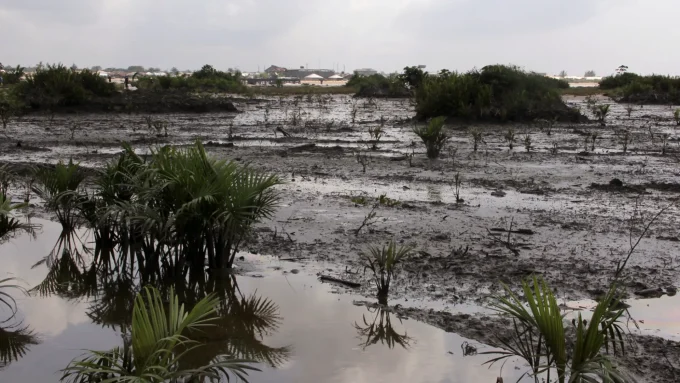
Footage verified in recent reporting showed a Navig8 tanker burning near Oman’s coast. Satellite imagery also revealed a large plume of smoke at the location. Separate reports documented oil leaking from damaged vessels, with contamination reaching parts of the Omani coastline and waters off the United Arab Emirates.
The environmental consequences are particularly troubling. An oil spill can damage marine ecosystems, threaten fishing activities and create expensive clean-up operations. The danger does not end when a damaged vessel is extinguished or leaves the area.
The International Maritime Organization has also recorded a substantial number of maritime incidents since the conflict began. Its figures reported on November 11 showed 133 incidents in the region, with at least 25 seafarers killed.
For the people working aboard these vessels, the crisis is not an abstract argument about oil prices. It is a direct threat to their lives and livelihoods.
Why peace negotiations may not immediately restore oil flows
Diplomatic efforts can raise expectations that the conflict will ease, but a political breakthrough does not automatically make commercial shipping safe.
Shipowners, insurers and energy companies must consider whether vessels can complete their journeys without being attacked, detained or caught in military operations.
Insurance is a major part of that calculation. When the risk of sailing through a particular area increases, war-risk insurance premiums can rise sharply. Shipowners may demand higher freight rates, delay voyages or refuse to send vessels into dangerous waters.
Even if an agreement reduces military tensions, confidence could take time to return. Damaged infrastructure must be assessed, vessels need to be repositioned and shipping companies must be convinced that the routes are safe.
The presence or suspected presence of naval mines creates another problem. Any serious effort to restore normal traffic would require confidence that shipping lanes are clear and that vessels can navigate without facing hidden explosives.
This explains why expectations of peace do not necessarily translate into an immediate recovery in oil shipments. The physical and commercial risks can remain long after diplomatic statements have changed.
What the crisis means for Nigeria
For Nigeria, the situation presents an economic dilemma.
As a major crude oil producer, the country could benefit from stronger international oil prices if it can increase production and deliver more crude to the market. Higher prices can improve the value of export earnings and potentially strengthen government revenue.
But the benefit is not automatic.
Nigeria’s 2026 budget was prepared using an oil price benchmark of $64.85 per barrel and an assumed production level of 1.84 million barrels per day. Actual revenue will depend on how much crude the country produces and exports, the price it receives, production costs and other deductions.
A rise in international prices cannot compensate indefinitely for weak production or disruptions that prevent Nigeria from fully taking advantage of its export capacity.
There is also the other side of the equation. Nigeria remains exposed to international energy-market movements through the cost of imported petroleum products, shipping and other economic activities linked to fuel prices.
Higher crude prices and freight costs can increase pressure on the cost of moving and supplying petroleum products. The eventual effect on domestic prices, however, also depends on exchange rates, refining arrangements, distribution costs and market conditions.
For households and businesses already dealing with high operating expenses, prolonged disruption in global energy trade could add another layer of uncertainty.
The risk extends beyond the oil market
The Strait of Hormuz is also important for the movement of liquefied natural gas and other essential commodities. A disruption could therefore affect electricity generation, industrial production and the cost of goods transported through international supply chains.
Countries that depend on imported energy may face higher bills, while businesses could struggle with rising insurance, shipping and fuel expenses.
The crisis also exposes a wider weakness in the global economy: the concentration of critical trade flows through a small number of strategic waterways. When insecurity threatens one of these routes, the consequences can spread quickly across countries that have no direct involvement in the conflict.
The immediate question is whether diplomatic efforts can reduce the danger and restore confidence among shipowners. But the longer-term challenge is ensuring that global energy supplies are not left so vulnerable to repeated disruption in a single maritime corridor.
For now, the Strait of Hormuz remains a reminder of how quickly a regional conflict can become a global economic problem. Until vessels can move through the waterway with greater confidence, the risks to oil supplies, trade and energy security will remain.






Leave a comment