


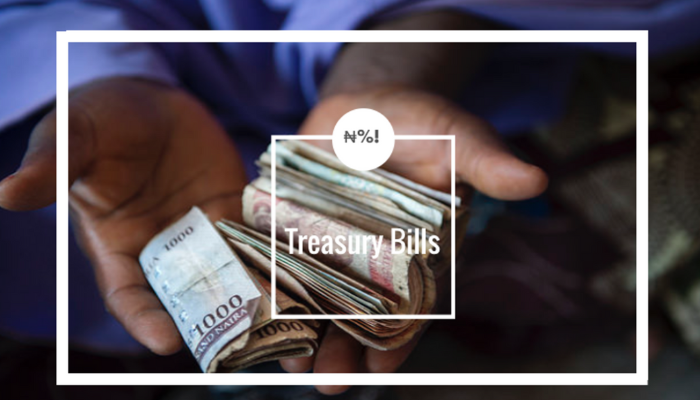
Investors submitted more than ₦1.08 trillion for Nigeria’s one-year Treasury Bills at Wednesday’s auction, demonstrating sustained demand for government securities despite a fresh increase in the instrument’s interest rate.
The 364-day Nigerian Treasury Bill attracted approximately ₦1.079 trillion in subscriptions against an offer of ₦600 billion, representing demand equivalent to 179.85 per cent of the amount available.
The Debt Management Office (DMO), acting on behalf of the Federal Government through the Central Bank of Nigeria (CBN), eventually allotted ₦672.91 billion to the instrument, exceeding its original offer by approximately ₦72.91 billion.
However, the stronger demand came alongside a rise in the stop rate to 15.89 per cent from 15.80 per cent at the November 4 auction. The nine-basis-point increase suggests investors sought a slightly higher return before committing their funds for another year.
The outcome reinforces the one-year Treasury Bill’s position as the preferred instrument among investors participating in Nigeria’s short-term government securities market.
Demand remains heavily concentrated on one-year bills
The latest auction exposed a significant difference between investor appetite for longer-dated Treasury Bills and the shorter instruments.
While the 364-day bill attracted more than ₦1 trillion in subscriptions, demand for the 91-day and 182-day securities remained relatively weak.
The 91-day instrument attracted approximately ₦19.18 billion in bids, while the 182-day bill received about ₦23.02 billion. Both were offered at ₦100 billion each.
The DMO allotted approximately ₦18.12 billion to the 91-day instrument and ₦22.28 billion to the 182-day bill.
Across the three maturities, total subscriptions reached approximately ₦1.12 trillion, while the government allotted about ₦713.30 billion.
The figures show that investors were overwhelmingly more interested in locking their money into the one-year instrument than committing funds for shorter periods.
This preference may reflect investors’ assessment of available returns, expectations about future interest rates and their willingness to secure a relatively predictable investment over a longer period.
Higher yield signals changing market conditions
The increase in the 364-day stop rate is another important feature of the auction.
After declining from earlier highs, the one-year rate had settled at 15.80 per cent at the November 4 auction. Its movement to 15.89 per cent represents a modest reversal in the recent downward trend.
Although the increase is relatively small, it shows that the government is not necessarily able to reduce borrowing costs at every auction simply because investor demand remains strong.
The stop rate is the discount rate at which successful bids are accepted. Investors’ actual returns depend on the purchase price and the amount received at maturity.
For the Federal Government, Treasury Bills provide a way to raise short-term financing to meet funding requirements and refinance maturing obligations. For investors, they offer exposure to government-backed securities without the longer commitment associated with conventional government bonds.
The balance between investor demand and the rate the government is willing to accept remains central to how much money is raised at each auction.
Implications for banking-system liquidity
The auction also has implications for liquidity in Nigeria’s financial system.
The DMO had offered ₦800 billion across the three maturities, consisting of ₦600 billion in 364-day bills and ₦100 billion each in the 91-day and 182-day instruments.
Total allotments of approximately ₦713.30 billion fell below the overall offer but exceeded the amount initially offered on the one-year instrument.
With approximately ₦148.57 billion in Treasury Bills maturing at settlement, the latest allotment implies a net withdrawal of roughly ₦564.74 billion from the financial system, assuming the full reported allotment and maturity figures.
Such withdrawals can reduce the funds available within the banking system, although the broader liquidity position also depends on government spending, central bank operations, maturing securities and other financial flows.
The distinction matters because strong demand for Treasury Bills does not automatically mean banks have less money to lend. The eventual effect depends on how the funds move through the financial system after the auction.
What the auction tells investors and policymakers
The latest results reveal a market still willing to commit substantial funds to government securities, particularly at the one-year end of the maturity curve.
For investors, the higher stop rate offers a slightly improved return compared with the previous auction, although the attractiveness of that return must be considered alongside inflation and alternative investment opportunities.
For the government, the auction provides funding while showing that investors remain interested in its short-term debt instruments. However, the increase in the stop rate also highlights the importance of borrowing costs as the authorities manage their financing requirements.
The next auctions will provide further evidence of whether the increase in the one-year rate represents a temporary adjustment or the beginning of a broader change in Treasury Bill pricing.
For now, the message from Wednesday’s auction is clear: investor demand for Nigeria’s one-year Treasury Bills remains strong, but the government is having to offer a slightly higher rate to attract that money.









Leave a comment