


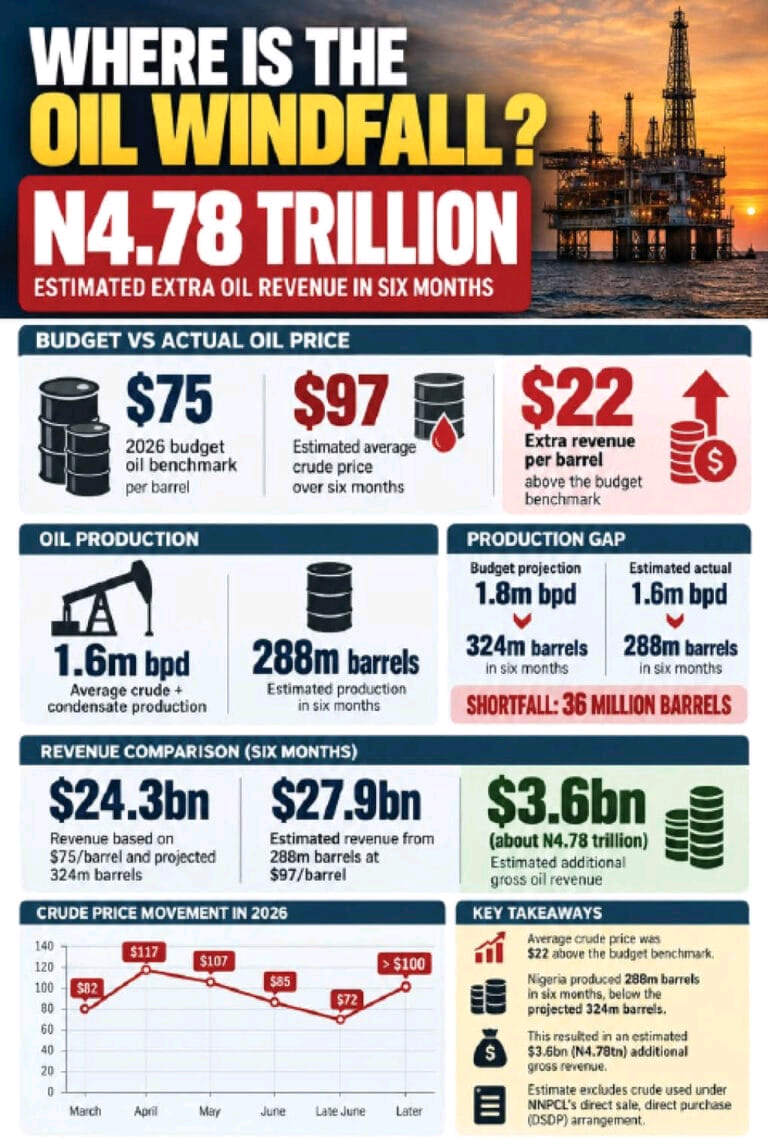
Nigeria’s rising oil revenues have sparked renewed questions over how the Federal Government is managing the country’s oil windfall and whether Nigerians are benefiting from increased earnings.
The oil windfall refers to additional revenue generated when crude oil prices, production or export earnings exceed government projections. Such extra income is expected to strengthen public finances, support development projects and improve the country’s economic position.
However, concerns have continued over transparency, accountability and the use of oil revenues. Critics argue that despite billions of naira in oil earnings, many Nigerians are still struggling with high food prices, unemployment, poor infrastructure and rising living costs.
The debate has also increased calls for the government to provide clear details on how much additional revenue has been generated, where the funds have been allocated and what projects have benefited from the money.
Economic experts have stressed that increased oil earnings should be properly managed to reduce Nigeria’s dependence on crude oil and strengthen other sectors of the economy.
They also called for greater transparency in the management of oil revenues, warning that without proper accountability, increased earnings may fail to translate into meaningful improvements in the lives of Nigerians.
The question therefore remains, where is Nigeria’s oil windfall, and how much of it has actually reached the people?








Leave a comment