


Scientists have warned that declining insect populations could have far-reaching consequences for ecosystems, with new research showing that insects provide essential services to animals beyond serving as a source of food.
A review published in Nature Reviews Biodiversity found that insects provide food, shelter, protection, sanitation and other ecological functions relied upon by birds, mammals, reptiles and amphibians. Nearly three-quarters of terrestrial and freshwater vertebrates with available data eat invertebrates, with insects often making up a major part of their diets.
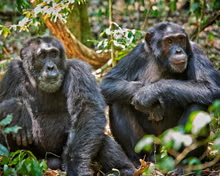
The research identified a range of less obvious relationships. Chimpanzees have been observed applying insects to wounds, while more than 200 bird species use ants to remove parasites. Termite mounds also provide shelter with stable temperatures and humidity for some birds, reptiles and mammals.
Insects contribute to ecosystem sanitation through activities such as breaking down animal waste, while pollination, seed dispersal and decomposition also make them important to forest regeneration and global carbon cycles.
Researchers warned that widespread disruption of insect communities could affect other species, although the full consequences remain difficult to predict because many insect-vertebrate relationships have not been adequately studied.
The scientists called for insect conservation to receive greater attention as biodiversity loss accelerates worldwide.











Leave a comment