


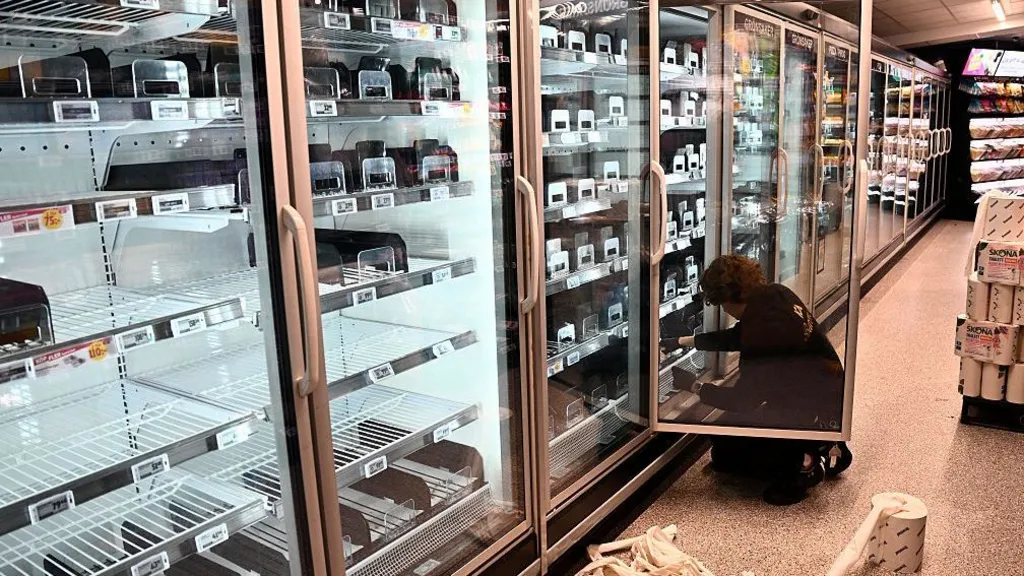
Tens of thousands of refrigerators and freezers across the UK have been secured following a nationwide cybersecurity operation aimed at preventing hackers from interfering with food storage systems. The secret operation involved major supermarkets, warehouses, restaurants, petrol stations, hotels and sports stadiums after researchers discovered a security weakness that could have exposed refrigeration equipment to cyber-attacks.
The warning came amid a series of cyber-attacks targeting refrigeration temperature controllers across Europe, resulting in large quantities of food being spoiled and millions of pounds in financial losses. France previously blamed Iran for one of the attacks affecting its supermarkets, although Tehran denied the accusation.
The potential vulnerability in the UK was discovered in late October by ethical hackers at cybersecurity company Omega Solutions. Further investigations by security experts at Pen Test Partners confirmed the concerns and prompted an urgent response involving the National Cyber Security Centre (NCSC), the Department for Environment, Food and Rural Affairs (Defra) and the Food Standards Agency (FSA).
Following the discovery, authorities contacted dozens of businesses and instructed them to secure vulnerable systems. Thousands of devices responsible for controlling tens of thousands of refrigerators and freezers were disconnected from the internet, either remotely or manually. In some locations, employees were instructed to remove internet cables and monitor storage temperatures themselves to prevent disruptions.
Major supermarket chains reportedly redirected their IT teams to deal with the threat, with one employee revealing that hundreds of devices were taken offline daily over the course of a week. The employee warned that a successful attack could have caused serious business interruptions, disrupted food supply chains and destroyed millions of pounds worth of stored products.
The concerns followed three major waves of refrigeration-related cyber-attacks recorded this year. In August, refrigeration systems at a small number of US military bases were affected. In October, hundreds of supermarkets and food processing facilities in France were targeted, while another attack in early November affected supermarkets across seven European countries, particularly Belgium and Luxembourg. Some blood bank facilities in France were also impacted.
Investigations eventually identified potential weaknesses in refrigeration controllers manufactured by British company Resource Data Management (RDM), which are widely used across the UK food and hospitality industries. Security researchers warned that the devices could be vulnerable to attacks involving weak passwords and accessible hardware.
However, RDM disputed comparisons between its equipment and the systems targeted in Europe, arguing that exploiting its devices would require physical access to certain hardware. The company also maintained that the security investigation involved dismantling its equipment and went beyond what would normally happen during standard testing.
RDM Chief Executive Ged Evans said the company had acted quickly by releasing initial security updates, contacting customers and recommending measures to reduce potential risks. The company also confirmed that there was no evidence of malicious activity involving its refrigeration controllers and that it remained in contact with cybersecurity authorities.










Leave a comment