


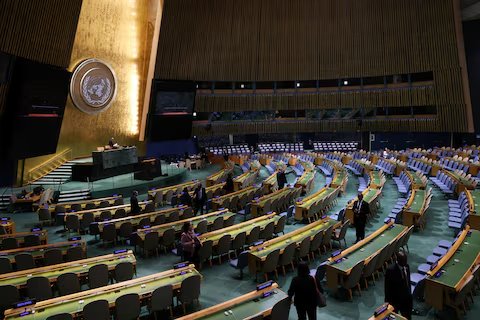
The United Nations is facing renewed questions over its ability to remain an effective force in global affairs as geopolitical tensions deepen, conflicts persist and major powers increasingly pursue competing interests.
The debate comes as the UN prepares for another period of intense diplomatic activity, with member states confronting wars, humanitarian crises, climate pressures and economic challenges that require international cooperation.
The organisation’s ability to act is often constrained by divisions among the five permanent members of the Security Council, whose veto powers can block resolutions on major international crises. Disagreements among powerful countries have repeatedly exposed limits to the UN’s capacity to produce unified responses.
At the same time, the organisation remains a central platform for international diplomacy and cooperation, overseeing agencies and programmes covering health, development, refugees, food security and humanitarian assistance.
Questions about reform have also intensified, particularly over the composition of the Security Council and demands from countries in Africa, Asia and Latin America for greater representation in global decision-making.
The challenge for the UN is to demonstrate that multilateral cooperation can still deliver practical results despite growing geopolitical fragmentation.
Its future influence will depend partly on whether member states can agree on reforms while continuing to use the organisation as a forum for addressing problems that cannot easily be managed by individual countries.





Leave a comment