


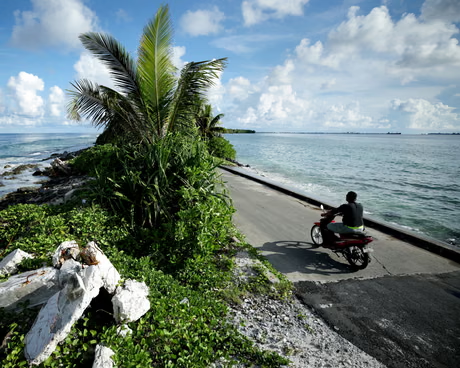
Tropical regions could remain among the last parts of the world to benefit from efforts to bring global greenhouse gas emissions down to net zero, according to new research by Australian climate scientists.
The study, led by researchers at the University of Melbourne and published in Environmental Research Letters, found that temperature increases in tropical regions have been greater relative to historical levels than in wealthier countries at higher latitudes.
Researchers said this inequality would not disappear simply when global emissions reach net zero. The effects of carbon already released into the atmosphere could continue for decades, with some impacts potentially lasting for centuries.
The findings are significant for poorer countries located around the equator, many of which have contributed relatively little to historical greenhouse gas emissions but face some of the strongest climate impacts.
Tropical ecosystems, including coral reefs, are particularly vulnerable because many have evolved within relatively narrow temperature ranges. Continued warming could therefore cause lasting damage even after global emissions stop increasing.
The researchers said reaching net zero sooner would reduce the amount of additional warming experienced by vulnerable regions. They also noted that removing more carbon dioxide from the atmosphere could eventually begin reversing some of the imbalance, although this would take many decades.
A separate UN report warned that climate-related disasters could also increase the risk of statelessness, particularly in low-lying island nations.









Leave a comment