


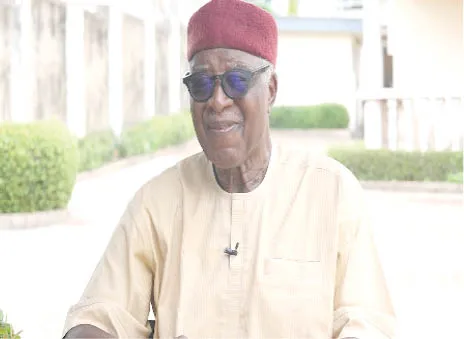
Saror, who served as the university’s Vice-Chancellor from 1991 to 1995, disclosed the experience while reflecting on his tenure during a recent interview.
He said the crisis began to intensify towards the end of his administration after ASUU members submitted a petition against his leadership. Saror recalled that he first heard about the petition while returning to Zaria with his family after attending a chieftaincy ceremony in Gboko on December 31, 1994.
According to him, he was surprised to hear on the radio that the union had petitioned against him. He subsequently went to the Kaduna office of the Nigerian Television Authority to respond publicly to the allegations contained in the petition.
The disagreement later escalated into demonstrations on the university campus, with the Senate Building reportedly locked during the crisis.
Saror said the dispute was partly connected to disagreements over the management of universities following the implementation of the Structural Adjustment Programme, which had affected the country’s university system.
He explained that some members of ASUU wanted greater involvement in the management of universities, a position he resisted as vice-chancellor.
The former vice-chancellor said his decision to stand firm against the demand contributed to growing opposition to his administration.
He recalled that the situation eventually took an unusual turn when he learnt that a snake had been brought into his office.
Saror said the incident was intended to frighten him into resigning, but he refused to leave office. He identified a man named Haruna from Shika, whom he knew as a snake charmer, as the person allegedly brought into the incident.
According to Saror, those behind the move wanted him to resign, but he maintained that only the Head of State, General Sani Abacha, who was also the university’s visitor at the time, had the authority to remove him.
The dispute eventually attracted the attention of the military government, which established a commission of inquiry headed by Major-General Mamman Kontagora to investigate the crisis at the university.
Saror said the commission submitted its report shortly before the end of his tenure and recommended that he be removed from office. He said this came despite the fact that he had already informed the university council that he would not seek another term.
He was, however, allowed to complete his tenure before handing over to Kontagora, who was subsequently appointed sole administrator of the institution.
ABU’s institutional history identifies Saror as the university’s seventh vice-chancellor, serving from 1991 to 1995.
Despite the difficult period, Saror said his relationship with the university was not permanently damaged. He later sold his agricultural farm in Zaria to the institution and was subsequently recognised by the university’s alumni association.
He said the experience nevertheless influenced his decision not to seek another term as vice-chancellor, particularly because the level of hostility had raised concerns about the safety of himself and his family.
Saror’s account offers a glimpse into the tensions that characterised university administration and relations between management and academic staff unions during the 1990s.
The account remains Saror’s recollection of events from more than three decades ago, including his claim about the snake being brought into his office.










Leave a comment