



By Benson Daniel
Britain’s traditional fish and chip shops are facing a difficult period as rising operating costs, expensive fish supplies and changing consumer preferences put pressure on businesses across the sector.
For some owners, the financial strain has become severe enough to make closing the doors more profitable than continuing to trade.
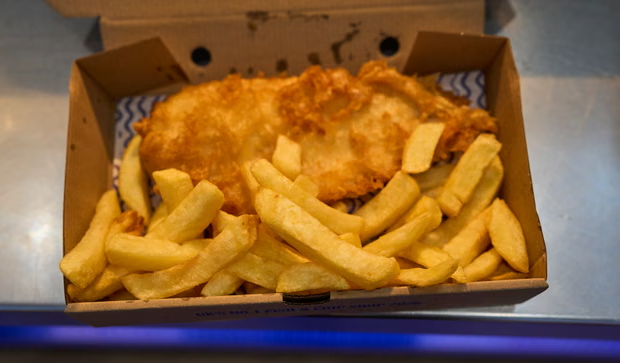
One family-run shop in Cheshire recently shut after 19 years in business, with its owners saying a combination of rising fish prices, taxation, energy bills, wages and other expenses had left too little profit to sustain operations.
The experience reflects a wider problem in an industry that has already contracted dramatically over several decades. Britain now has an estimated 7,000 to 8,000 fish and chip shops, compared with about 25,000 at the industry’s peak in the 1930s. Industry research this year found that nearly half of shop owners were extremely worried about the future of their businesses, while about one in five were considering leaving the sector within 12 months.

The cost of serving customers has also risen sharply. The average takeaway portion of fish and chips is now around £11.43, up more than 60% from approximately £7 five years ago. For families, the price of a traditional meal can therefore represent a significant expense, encouraging some customers to reduce how frequently they visit.
Fish itself has become one of the biggest challenges. Cod and haddock remain the preferred choices for many customers, but reduced fishing quotas and disruption in international seafood supply chains have pushed prices higher.

One operator cited in the latest industry discussion said the cost of an 18-kilogram case of cod fillets had risen from about £160 three years ago to roughly £330. Potato and cooking oil prices, meanwhile, have also faced upward pressure, while energy-intensive frying equipment adds considerably to running costs.
Tax and employment costs have added another layer of pressure. Operators must contend with VAT, business rates, higher minimum wages and other employment-related expenses. For businesses working with already narrow margins, relatively small increases in costs can have a substantial impact on profitability.

Changing eating habits are creating another challenge. Younger customers have a much wider choice of takeaway food than previous generations, with pizza, burgers, fried chicken and Asian cuisines competing for the same customers.
Some younger consumers are also more conscious of health and are reducing their consumption of deep-fried food.
Fish and chip shops are therefore being forced to reconsider how they operate. Some businesses have introduced different types of fish, expanded their menus or added items such as chicken, kebabs, fishcakes and other alternatives.
Others are taking a more radical approach.

One former fish-and-chip business in Cheshire was transformed into a high-end sandwich shop after its owners concluded that the traditional model was no longer commercially attractive. The new business has reportedly achieved significantly higher turnover while also attracting younger customers through social media and a more modern menu.
However, the traditional model is not disappearing entirely.
Some younger operators are investing in quality, responsible sourcing and better presentation rather than abandoning fish and chips. Businesses that have focused on carefully sourced seafood and consistent preparation have continued to attract strong customer demand.
The sector could also receive some relief if fish supplies improve. Industry expectations point to higher cod and haddock quotas next year, potentially easing some pressure on prices.
For Britain’s thousands of fish and chip shops, however, survival may increasingly depend on their ability to control costs while attracting a new generation of customers.
The challenge is no longer simply how to sell fish and chips. It is how to preserve a traditional British food business in an environment where ingredients are more expensive, customers have more choices and the economics of running a small shop have become increasingly difficult.











Leave a comment