


By Benson Daniel
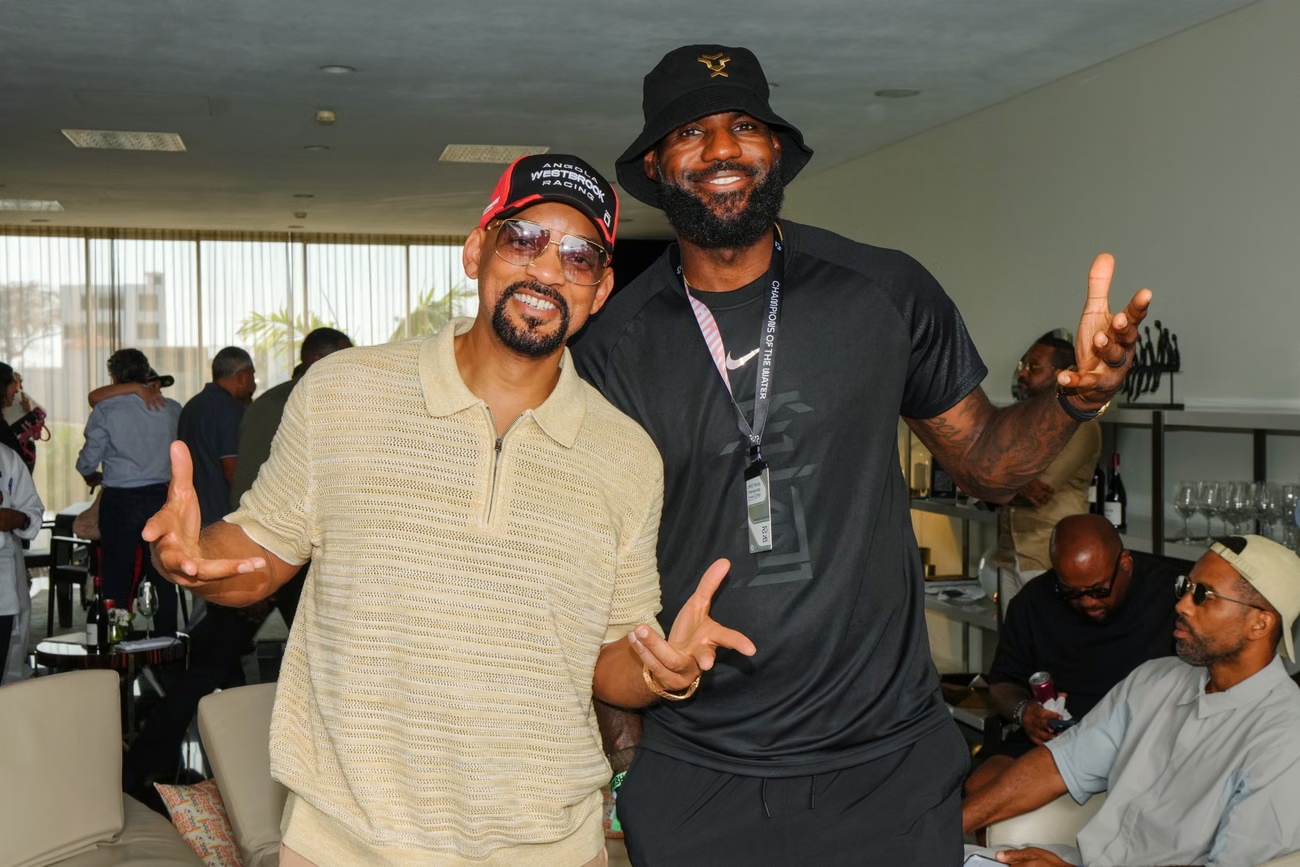
LeBron James built much of his public identity around challenging the traditional power structures of professional sport. From his decision to control his own career and business interests to his outspoken positions on social issues, the NBA superstar has often presented himself as an athlete determined to have a voice beyond the basketball court.
But as his career enters its later stages, a different picture has emerged.
James is now deeply connected to the commercial machinery that surrounds modern sport. His business interests, media ventures, sponsorships and relationships with major corporations have made him not only one of basketball’s most influential players but also a significant figure within the industry he once criticised.
The contrast has become a subject of debate as James continues to expand his influence away from the court.
When he entered the NBA in 2003, James was quickly transformed into one of the world’s most marketable athletes. His enormous playing ability made him valuable to sponsors, broadcasters and commercial partners, while his growing popularity gave him a platform that few athletes possessed.
Rather than simply accepting the traditional model in which players were primarily entertainers employed by teams, James increasingly sought greater control over his career and financial interests.
His decision in 2010 to announce his move from the Cleveland Cavaliers to the Miami Heat through a televised programme remains one of the most famous examples of an athlete controlling the presentation of a major career decision.
The move generated significant criticism at the time, but it also demonstrated how much influence James had over his own public image.
His business empire subsequently expanded. James became involved in entertainment production, media, investments and endorsements, while building partnerships with major international brands.
He has also used his platform to discuss racial inequality, voting rights, education and other social issues. His activism has included support for initiatives aimed at helping young people and communities in the United States.
That history makes his relationship with the commercial side of sport particularly interesting.
Modern professional athletes increasingly operate as businesses in their own right. Social media has made players directly responsible for building audiences, promoting products and developing personal brands, while investment opportunities have allowed successful athletes to accumulate influence beyond their playing careers.
James has been particularly successful in navigating that environment.
His supporters can point to this as evidence that athletes no longer have to surrender control of their careers to teams, leagues and sponsors. His business activities have demonstrated how an athlete can turn sporting fame into ownership, investment and long-term influence.
Critics, however, can view the same development differently.
The argument is that an athlete who once challenged powerful institutions can eventually become part of the commercial system he once stood outside. Once an athlete owns businesses, works with multinational companies and becomes a major entertainment producer, the distinction between challenging the system and benefiting from it can become increasingly complicated.
The contradiction is not unique to James.
Many prominent athletes who speak against aspects of the sports industry also depend on the same industry for their wealth and influence. Professional sport is simultaneously a workplace, entertainment business and global commercial marketplace.
James’ evolution therefore reflects a broader transformation in the relationship between athletes and power.
Players today have considerably more opportunities to negotiate contracts, build businesses and control their public identities than previous generations. But gaining that power can also mean becoming more closely integrated into the commercial structures that generate the wealth.
James has not abandoned his activism. He continues to speak publicly on social and political issues and remains involved in philanthropic initiatives.
At the same time, his extraordinary commercial success has made him part of the establishment of modern sports business.
That tension is perhaps the most interesting part of his legacy.
LeBron James’ career can be viewed not simply as the story of a basketball player who became wealthy, but as an example of how the balance of power in professional sport has changed. The athlete can now be a player, activist, investor, media personality and corporate partner at the same time.
Whether that represents resistance to the system or successful integration into it depends largely on how one interprets the evolution.
What is clear is that James has helped demonstrate that today’s greatest athletes do not merely participate in the sports industry. They can become powerful economic actors within it.










Leave a comment