


By Blessing Fali
Fresh political tensions have emerged ahead of the 2027 general elections as former Rivers State Governor Nyesom Wike and several All Progressives Congress (APC) governors clashed over the proposed “Rainbow Coalition,” a political alliance designed to broaden support across party lines.
The coalition, reportedly aimed at uniting influential figures from different political backgrounds, has sparked controversy within the APC. While some governors see it as a strategic move to consolidate power and attract diverse blocs of voters, others argue that the arrangement undermines party cohesion and could weaken internal structures.
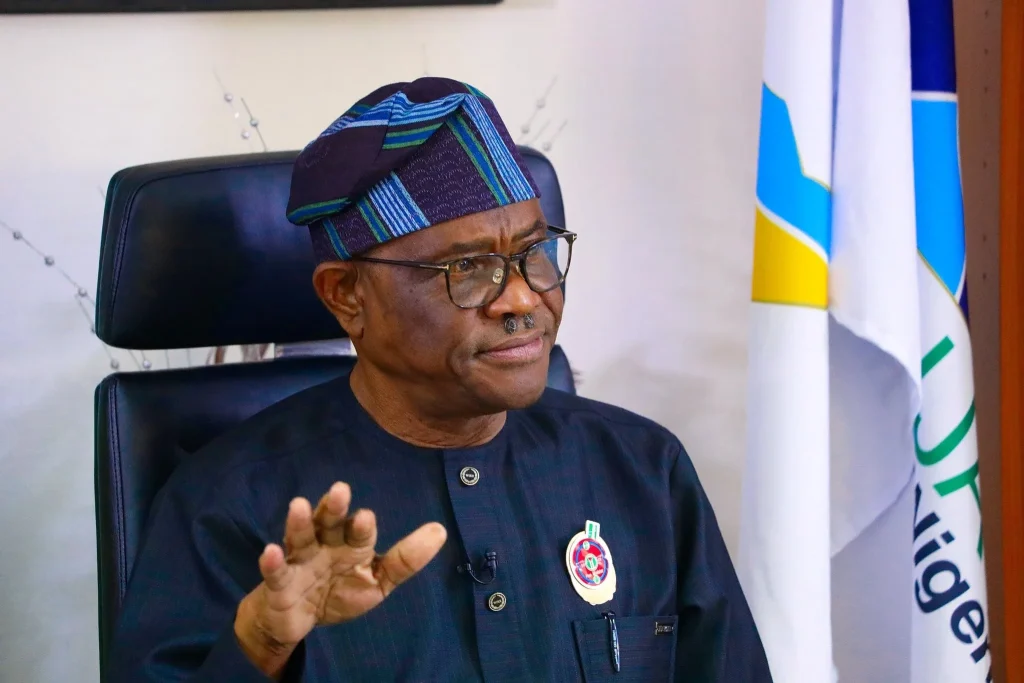
Wike, who has remained a dominant figure in Nigerian politics since leaving office, is said to be positioning himself as a key player in the coalition. His involvement has raised eyebrows among APC governors, with critics accusing him of attempting to leverage the alliance for personal political gain.
During a closed-door meeting in Abuja, disagreements reportedly flared as APC governors questioned the legitimacy of Wike’s role in the coalition. Some insisted that the APC should focus on strengthening its internal machinery rather than forming alliances that could dilute its identity.
Political analysts note that the clash reflects deeper divisions within the ruling party as it prepares for the 2027 elections. The Rainbow Coalition, if successfully implemented, could reshape Nigeria’s political landscape by bringing together leaders from different ideological backgrounds. However, its feasibility remains uncertain given the resistance from APC governors and the suspicion surrounding Wike’s involvement.
Supporters of the coalition argue that Nigeria’s complex political environment requires broad alliances to ensure stability and inclusiveness. They believe that the Rainbow Coalition could serve as a platform for dialogue and cooperation among diverse political actors, reducing tensions and fostering national unity.
Opponents, however, warn that such alliances often collapse under the weight of conflicting interests. They point to past attempts at coalition-building that failed to deliver lasting results, cautioning that the Rainbow Coalition may suffer the same fate if not carefully managed.
Observers believe the outcome of this clash will significantly influence APC’s strategy heading into 2027. If the party embraces the coalition, it could expand its reach and attract new supporters. If it rejects the idea, it may double down on internal consolidation, focusing on loyalty and discipline within its ranks.
For now, the Rainbow Coalition remains a contested idea, symbolizing both the promise of inclusivity and the risk of fragmentation. As Nigeria’s political climate heats up, the debate over alliances like this will likely intensify, shaping the narratives that dominate the 2027 campaign season.










Leave a comment