


The Federal Government has stepped up efforts to modernise Nigeria’s meat-processing industry, with plans to end livestock slaughtering in uncontrolled environments and move the country towards regulated, modern abattoir facilities.
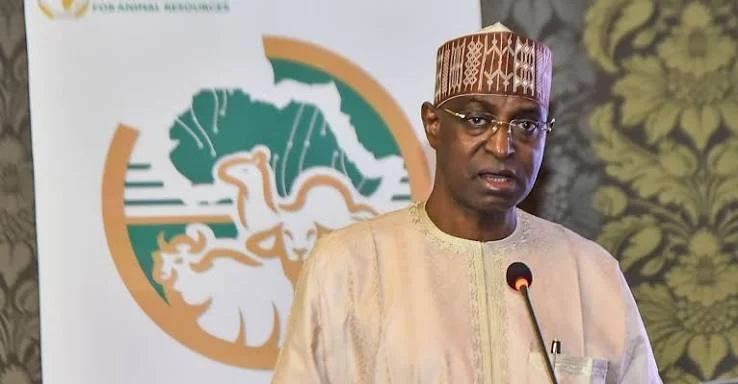
The Minister of Livestock Development, Idi Mukhtar Maiha, disclosed the government’s position in Kaduna while speaking at the launch of Olam Agri’s TruValue Cattle Feed.
Maiha said the government had commenced the development of modern abattoirs and was working towards a system where livestock destined for the meat market would pass through regulated processes before slaughter.
The minister said the government would sustain its efforts to ensure that, in the near future, slaughtering of animals would take place under the controlled environment of modern abattoirs.
Focus on food safety
The planned transition is aimed at improving hygiene and food safety in the red-meat value chain, while strengthening veterinary inspection, slaughtering standards and waste-management practices.
The Federal Ministry of Livestock Development has said modern abattoirs will provide a more hygienic and efficient environment for meat processing, with facilities designed to support veterinary inspection, quality assurance and proper handling of animal waste.
A modern 500-bull-per-day abattoir is already being developed in Jos, Plateau State. According to the Federal Government, the facility is designed to incorporate modern slaughtering, veterinary inspection, quality assurance and waste-management systems.
From live-animal trade to processed meat
The Federal Government is also pushing a broader shift away from transporting live animals over long distances towards processing meat closer to production centres.
The Minister has argued that modern abattoirs and meat-processing facilities can help reduce losses, improve meat quality and strengthen the wider livestock value chain.
The government’s strategy includes the development of feedlots, modern abattoirs and meat-processing infrastructure, alongside stronger market systems.
By-products to drive new industries
The modernisation programme is not limited to slaughtering and meat sales.
The Jos facility, for instance, is designed to support the utilisation of animal by-products, including hides, skins, bones, blood and fats, for industrial purposes such as leather production, fertiliser, animal-feed ingredients, biogas and other value-added products.
This approach is expected to make more components of slaughtered animals commercially useful while reducing waste generated during meat processing.
States already joining the transition
The push for modern abattoirs is also being reflected at the state level.
In Edo State, the Federal Government and the state government have supported the development of an ultramodern livestock processing facility in Benin City under the World Bank-supported Livestock Productivity and Resilience Support project.
The Federal Ministry of Livestock Development has also reported plans and investments involving modern livestock-processing infrastructure in other states.
Part of wider livestock transformation
The move forms part of the Federal Government’s broader strategy to transform Nigeria’s livestock industry into a modern and competitive sector.
The National Livestock Growth Acceleration Strategy 2025–2035 identifies livestock value-chain development and market access as a key pillar, with emphasis on modernising animal value chains and improving local production and processing.
For the government, replacing uncontrolled slaughtering with regulated facilities represents a shift from informal meat processing towards a system that places greater emphasis on hygiene, animal health, value addition and commercial processing.
As the modernisation programme expands, the effectiveness of the policy will depend not only on constructing new facilities but also on ensuring that livestock producers, traders, butchers and consumers are integrated into the emerging system.









Leave a comment