


By Benson Daniel
President Donald Trump is facing growing criticism from labour leaders and worker advocates over a series of policies they say have weakened trade unions, reduced workplace protections and shifted the balance of power further towards employers.
The criticism has intensified during Trump’s second term, with labour experts pointing to decisions affecting federal employees, workplace safety, wages, overtime rules and collective bargaining. Some union leaders have gone as far as describing him as the most anti union president in modern US history.
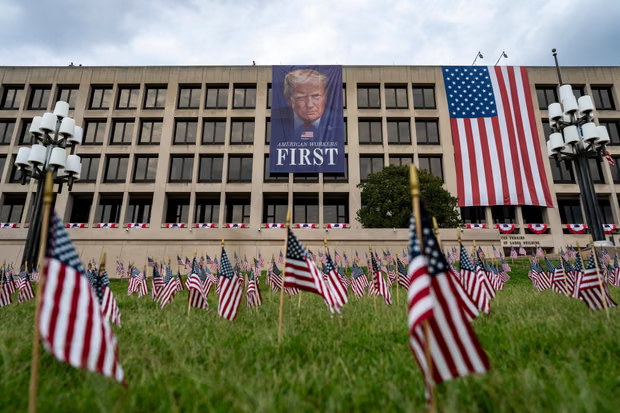
The accusations stand in sharp contrast to Trump’s political appeal to working class voters. His campaigns have repeatedly presented him as a champion of American workers, manufacturing and blue collar employment, while promising to challenge policies that he argues have disadvantaged ordinary Americans.
Since returning to the White House, however, his administration has pursued a programme that labour groups say has delivered a very different outcome.
Among the most controversial moves has been the effort to weaken collective bargaining rights for federal employees. More than one million federal workers could be affected by measures aimed at reducing or eliminating collective bargaining arrangements across parts of the federal government.
The administration has also taken steps that have weakened the role of the National Labor Relations Board, the federal agency responsible for protecting workers’ rights to organise and engage in collective bargaining. Trump removed a pro union board chair and appointed officials viewed as more sympathetic to business interests, leaving the agency facing criticism over its ability to pursue worker complaints.
Workplace safety has emerged as another major point of contention. Labour advocates have criticised cuts to Occupational Safety and Health Administration inspections, while protections relating to exposure to silica dust among workers have also faced delays.
For workers outside government, changes to wage and employment rules have created additional concerns. The administration has moved to roll back overtime protections, reduce minimum wage requirements for some federal contractors and make it easier for businesses to classify certain workers as independent contractors.
Labour organisations argue that such changes can leave employees with fewer protections and less bargaining power, particularly in industries where workers already have limited ability to negotiate wages and working conditions.
The dispute comes at a time when public support for organised labour remains relatively strong. US union membership increased by about 411,000 in 2025, while overall union density edged up from 9.9 per cent to 10 per cent. The number of workers represented by unions reached 16.5 million, the highest level in 16 years.
That growth has been strongest in states with stronger collective bargaining protections, highlighting the continuing political and economic divide over the role of unions in the American workplace.
Trump’s critics argue that the administration’s policies could reverse some of the gains workers and unions have made, while supporters maintain that reducing regulatory restrictions can encourage businesses to invest, hire and expand.
The political consequences could become clearer during the 2026 midterm elections, when working class voters and union households are expected to remain an important constituency.
The broader debate is therefore no longer simply about Trump and organised labour. It has become a contest over what role government should play in protecting workers, how much power employers should have and whether economic growth should come primarily through business freedom or stronger workplace rights.
For Trump’s opponents in the labour movement, the record of his second administration has already provided enough evidence to challenge his claim of being a champion of American workers. For his supporters, the changes represent an attempt to reduce bureaucracy and give employers greater freedom to create jobs.
The argument is likely to remain central to America’s political debate as unions seek to rebuild their influence and both parties compete for the support of workers ahead of the midterm elections.











Leave a comment