



By Benson Daniel
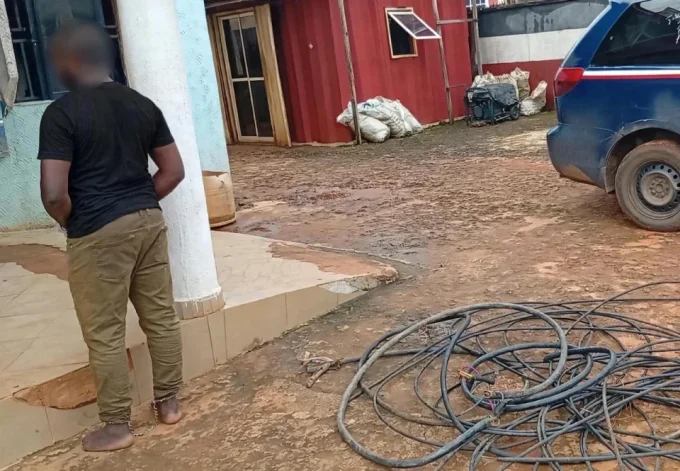
The Nigerian Communications Commission has raised concerns over the growing damage to telecommunications infrastructure, revealing that thousands of fibre optic cable cuts recorded across the country are linked largely to road construction and other civil engineering activities.
The development has emerged as a major threat to the reliability of Nigeria’s telecommunications networks, with frequent fibre damage disrupting internet services, affecting businesses and increasing the cost of network maintenance for operators.
NCC data showed that 19,384 fibre optic cable cuts were recorded between January and August 2025, while a further 5,934 incidents were reported in the first quarter of 2026. Industry operators have also reported an average of between 30 and 43 fibre cuts daily across the country.
Road construction and public works contractors have been identified as major contributors to the problem, particularly where underground telecommunications infrastructure is damaged during excavation without adequate consultation with network operators.
The repeated incidents have raised concerns about the sustainability of Nigeria’s digital infrastructure expansion, especially as the country seeks to extend fibre connectivity to more homes, businesses, schools and public institutions.
The NCC has warned construction companies, contractors and individuals against damaging telecommunications infrastructure during road works, excavation, drilling, trenching and other civil engineering activities.
In February, the commission, working with the Nigeria Security and Civil Defence Corps, warned that future damage caused by construction activities carried out without proper consultation with network operators and regulators would attract legal consequences.
The regulator has also called for stronger coordination between government agencies, road contractors and telecommunications operators before construction projects begin. Such coordination would allow contractors to identify the location of underground cables and prevent avoidable damage.
The impact of fibre cuts extends beyond temporary network disruptions. When major fibre routes are severed, large numbers of mobile and internet users can lose access to voice calls, data services and other digital platforms.
Businesses that depend on reliable internet connectivity for electronic payments, banking, e-commerce, communication and cloud based services can also suffer significant losses during prolonged outages.
Telecommunications companies are consequently forced to divert substantial resources towards emergency repairs and the replacement or relocation of damaged infrastructure. This increases operating costs and reduces the funds available for network expansion and improvements.
The industry recorded more than 19,000 fibre cuts during the first eight months of 2025, while MTN Nigeria alone reported 5,478 fibre cuts during the first seven months of that year. The operator eventually recorded more than 9,000 cuts for the full year.
Stakeholders have therefore called for stronger enforcement of existing regulations, improved fibre mapping and mandatory coordination between infrastructure owners and construction companies.
The NCC has also been working with relevant government agencies to strengthen protection for telecommunications infrastructure under Nigeria’s Critical National Information Infrastructure framework.
The commission’s efforts come as the country experiences rapidly rising demand for data and digital services. Any sustained disruption to fibre infrastructure could undermine efforts to expand broadband access and build a stronger digital economy.
Experts have consequently stressed the need for a national system that allows road agencies and contractors to identify underground infrastructure before excavation begins.
They argue that preventing fibre damage is considerably more efficient and less costly than repeatedly repairing cables after they have been cut.
For Nigeria to achieve its digital transformation ambitions, stakeholders say telecommunications infrastructure must be treated as critical national infrastructure whose protection requires cooperation across government agencies, construction companies, telecom operators and security authorities.
NCC, fibre cuts, telecommunications, road construction, fibre optic cables, digital economy, telecom infrastructure, broadband, internet services, Nigeria Communications Commission, network disruption, road contractors










Leave a comment