


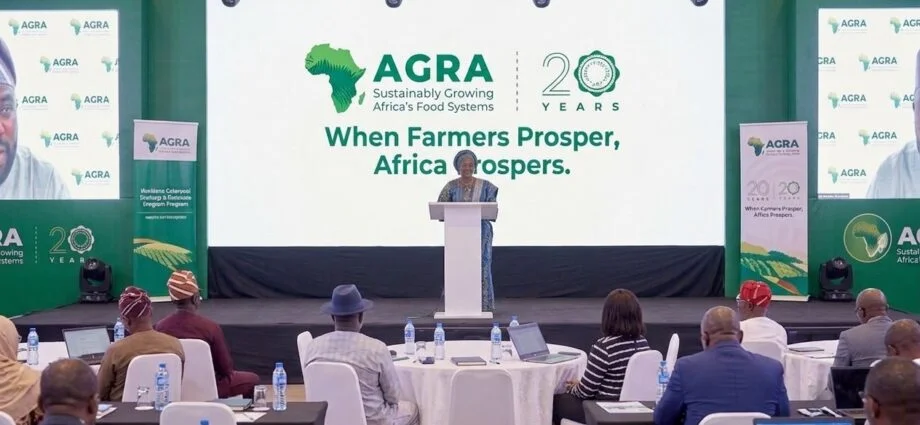
The Federal Government and the Alliance for a Green Revolution in Africa (AGRA) have renewed their commitment to strengthening collaboration aimed at promoting inclusive, sustainable and climate-resilient agriculture in Nigeria. The renewed partnership is expected to support efforts to improve agricultural productivity, strengthen food systems and enhance the resilience of farmers and rural communities facing the growing effects of climate change.
The collaboration reflects the increasing need for coordinated action as Nigerian farmers contend with challenges such as unpredictable rainfall, flooding, drought, rising input costs, soil degradation and other factors affecting food production. Government officials said building a resilient agricultural sector requires stronger partnerships among public institutions, development organisations, research institutions, private-sector actors and farming communities.
The partnership with AGRA is expected to focus on strengthening agricultural value chains, improving access to quality inputs and technologies, supporting farmers and creating opportunities for greater private-sector investment. Stakeholders also emphasised the importance of ensuring that women and young people are fully integrated into agricultural development programmes.
Women play a significant role in Nigeria’s agricultural value chains, while young people represent an important source of labour, innovation and entrepreneurship. Expanding their access to land, finance, technology, skills and markets could strengthen inclusive agricultural growth. Climate-smart agriculture is also expected to remain central to the partnership, with stakeholders advocating farming practices that improve productivity while helping farmers adapt to changing climatic conditions.
Such measures could include improved seed varieties, efficient irrigation, sustainable soil management, agroforestry, better water management and the use of digital technologies to provide farmers with timely information. The stakeholders further highlighted the importance of strengthening agricultural extension services to ensure that innovations and climate-smart practices reach farmers at the grassroots.
Improving storage, processing and transportation infrastructure was also identified as essential to reducing post-harvest losses and ensuring that farmers receive better returns from their produce. Experts said stronger value chains would help connect farmers with processors, aggregators and markets while creating opportunities for local businesses and agro-processors.
The partnership is also expected to promote policy reforms and institutional coordination capable of creating a more supportive environment for agricultural investment. Participants stressed that sustainable agricultural transformation cannot be achieved through isolated interventions, urging continued coordination among government agencies and development partners.
They called for increased financing for agriculture, particularly for smallholder farmers who often face difficulties accessing affordable credit and modern production technologies. AGRA has continued to advocate for stronger agricultural systems across Africa through partnerships focused on policy, markets, technology, financing and value-chain development.
The Federal Government reaffirmed its commitment to working with development partners to improve food security, strengthen rural livelihoods and position agriculture as a major driver of economic diversification. Stakeholders expressed optimism that deeper collaboration between the government and AGRA would help accelerate the adoption of climate-resilient agricultural practices and create greater opportunities for farmers, women and young entrepreneurs.
They noted that a more inclusive and resilient agricultural sector would not only strengthen Nigeria’s food supply but also contribute to job creation, poverty reduction and sustainable economic growth. The renewed partnership therefore signals a broader commitment to building an agricultural system capable of withstanding climate pressures while ensuring that the benefits of agricultural development reach communities across the country.











Leave a comment