


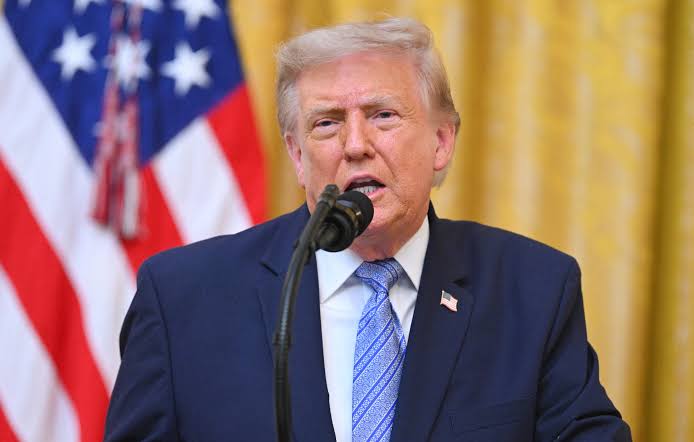
U.S. President Donald Trump threatened on Friday to seek the revocation of the broadcast licenses of major American television networks after they declined to carry a primetime address live, escalating his long running criticism of mainstream media organizations.
Trump accused the networks of denying Americans access to information of national importance after several broadcasters chose not to interrupt their regular programming to air his speech. He argued that the decision reflected political bias and said broadcasters using the public airwaves had a responsibility to serve the public interest.
In a post on social media, Trump warned that networks refusing to carry significant presidential addresses should risk losing their licenses, renewing calls he has made previously against broadcasters he has accused of unfair coverage.
Broadcast licenses in the United States are issued and regulated by the Federal Communications Commission (FCC). Legal experts note that the FCC licenses individual local television and radio stations not national television networks and that the agency operates independently of the White House. They also said the U.S. Constitution’s First Amendment provides strong protections for press freedom, limiting the government’s ability to penalize media organizations based on editorial decisions.
The White House defended Trump’s remarks, saying the president believes Americans should have access to important national announcements. The networks involved have not publicly commented on Trump’s latest criticism.
Trump has frequently clashed with major U.S. media organizations during both his current and previous administrations, accusing them of biased reporting and misinformation. News organizations have rejected those allegations, saying their editorial decisions are made independently and in accordance with journalistic standards.
The latest dispute comes amid heightened political tensions as the administration continues to address major domestic and international issues, with media coverage remaining a central point of contention between the White House and several national broadcasters.










Leave a comment