


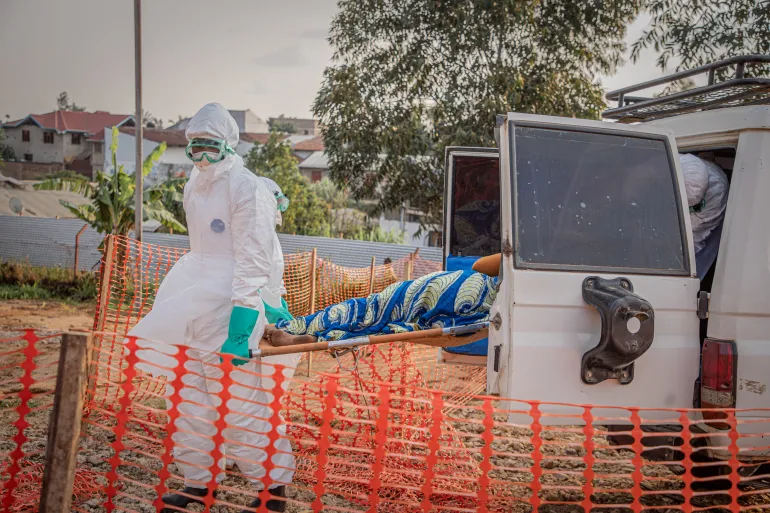
The number of confirmed Ebola cases in the Democratic Republic of the Congo has surpassed 2,000, as a growing strike by frontline health workers threatens to further weaken efforts to contain one of the fastest growing outbreaks in the country’s history.
The outbreak has reached 2,011 confirmed cases, including 754 deaths, with the majority of infections concentrated in the eastern province of Ituri. The epidemic is caused by the rare Bundibugyo strain of the Ebola virus, for which there is currently no approved vaccine or specific treatment.
The response has been complicated by a widening strike involving healthcare workers at Ebola treatment centres and hospitals, who say they have gone months without receiving salaries and lack adequate protective equipment. More than 100 health workers have contracted the virus since the outbreak began in May, highlighting the dangers faced by medical personnel on the front lines.
The World Health Organization (WHO) has warned that the outbreak remains in an expansion phase, with many new infections emerging outside known chains of transmission. Health officials say conflict, population displacement, community mistrust and limited funding continue to hamper surveillance, contact tracing and treatment efforts.
Medical charity Médecins Sans Frontières (MSF) has called for a significant increase in international support, warning that existing response efforts are insufficient to contain the rapidly spreading virus. Clinical trials evaluating potential treatments for the Bundibugyo strain have recently begun, offering hope for improving patient outcomes.








Leave a comment