


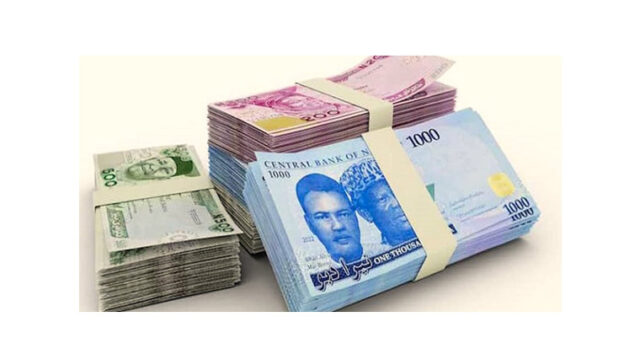
Nigeria’s foreign-exchange market is facing renewed pressure as preparations for the 2027 general elections coincide with rising demand for dollars ahead of the Christmas season, creating fresh challenges for the naira and the country’s ongoing efforts to stabilise its currency.
The naira closed at ₦1,394 per dollar on the Nigerian Foreign Exchange Market (NFEM) on Friday, November 20, while the parallel market rate reached approximately ₦1,460 per dollar over the weekend.
The latest movement reflects a combination of demand and supply pressures, with currency traders and economic analysts pointing to increased festive-season transactions, political spending, reduced dollar inflows and uncertainty surrounding the economic policy outlook.
The developments are particularly significant because they are emerging ahead of the 2027 elections, a period when increased political and government expenditure could introduce additional liquidity into an economy still working to contain inflation and strengthen exchange-rate stability.
Political Spending Raises Currency Concerns
Political activities are increasingly attracting attention as a potential source of additional foreign-exchange demand.
Currency traders interviewed in Abuja and Lagos said some customers had been purchasing dollars for individuals they identified as politicians preparing for the forthcoming elections.
Although such accounts do not independently establish the scale of election-related foreign-exchange transactions, they reflect concerns within the informal currency market that political preparations could be contributing to increased dollar demand.
Dr Muda Yusuf, Chief Executive Officer of the Centre for the Promotion of Private Enterprise, identified political spending, capital flight and policy uncertainty as possible factors behind the naira’s recent weakness.
He argued that political expenditure could inject substantial liquidity into the economy, increasing demand for foreign currency, particularly where transactions take place outside formal financial channels.
Yusuf also warned that uncertainty surrounding the future direction of economic reforms could affect investor confidence and encourage capital outflows.
These concerns extend beyond the currency market. If additional political spending increases demand for goods and services without corresponding growth in productive output, it could complicate efforts to moderate inflation.
Christmas Season Adds to Dollar Demand
The approaching festive season is introducing another layer of pressure.
December traditionally brings increased demand for foreign currency as Nigerians travel internationally, pay overseas school fees, finance medical treatment, purchase imported goods and settle other foreign obligations.
Businesses also face additional foreign-exchange requirements when restocking imported products ahead of the holiday period.
This seasonal demand is arriving at a time when the parallel market remains sensitive to the availability of dollars and the ability of individuals and businesses to access foreign currency through formal banking channels.
A separate Nairametrics report published on November 17 identified festive-season demand and early political activities as factors contributing to pressure in the informal market.
The report also highlighted limited access to foreign exchange through commercial banks and the incomplete reintegration of Bureau De Change operators into the formal supply chain as issues sustaining demand outside the official market.
The distinction matters because seasonal demand alone does not explain the currency’s movements. The availability of foreign currency, market confidence and the efficiency of official distribution channels also influence how pressure is transmitted across the exchange-rate system.
Foreign Reserves and Dollar Supply Remain Important
Nigeria’s external reserves provide another important measure of the country’s capacity to manage foreign-exchange pressures.
The reserves stood at approximately $54.65 billion on Friday, November 20, according to figures cited in the report, representing a decline of about $60.63 million from the previous day’s $54.713 billion.
Although reserves remain substantial, sustained declines can attract market attention, particularly when accompanied by rising demand for foreign currency.
Emerging markets economist Ike Ibeabuchi attributed the pressure partly to weaker dollar inflows from exporters, investors and other sources, alongside continuing demand for imports and international transactions.
His assessment points to a fundamental challenge for currency stability: Nigeria needs consistent foreign-exchange inflows to meet legitimate demand without placing excessive pressure on the naira.
Greater export earnings, stronger investment inflows and improved confidence in the domestic economy could help strengthen dollar supply over time.
CBN Faces a Difficult Monetary Policy Balancing Act
The latest currency movements also come as the Central Bank of Nigeria continues to pursue monetary policies intended to contain inflation and strengthen the transmission of its policy decisions.
At its September 21–22, 2026 meeting, the Monetary Policy Committee reset the Monetary Policy Rate to 23 per cent and retained the Cash Reserve Requirement for deposit money banks at 45 per cent.
The committee’s decisions were intended to reinforce monetary policy transmission and support the country’s disinflation process.
However, monetary policy faces additional complications when fiscal spending, political activity and seasonal demand increase liquidity in the economy.
The challenge is particularly relevant during election periods, when expenditure by political actors and government institutions can create additional demand for goods, services and foreign currency.
In a separate report, The Punch highlighted that the CBN had withdrawn more than ₦90 trillion through Open Market Operations during the first 11 months of 2026, reflecting the scale of its liquidity-management efforts.
Monetary tightening, however, cannot independently resolve structural weaknesses affecting foreign-exchange supply, export competitiveness and investor confidence.
What the Pressure Means for Businesses and Households
A weaker naira can have consequences extending well beyond foreign-exchange dealers.
Import-dependent businesses may face higher replacement costs for inventory, machinery, raw materials and other inputs. These expenses can eventually translate into higher prices for consumers.
Manufacturers that rely on imported components may also experience additional production costs, while businesses with foreign-currency obligations could face increased debt-servicing and payment pressures.
For households, the effects can appear through more expensive imported goods, international travel, education payments and other dollar-linked expenses.
The timing is especially sensitive because increased Christmas spending already places pressure on household budgets.
The wider economic concern is whether the latest currency weakness represents a temporary seasonal adjustment or the beginning of a more persistent period of instability.
That outcome will depend on several factors, including foreign-exchange inflows, the management of domestic liquidity, investor confidence and the scale of spending as political activities intensify.
Nigeria’s immediate challenge is therefore not merely to defend a particular exchange-rate level, but to strengthen the economic conditions that support sustainable currency stability.
As the country approaches the 2027 elections, disciplined fiscal management, predictable economic policies and stronger foreign-exchange supply will be essential to preventing seasonal and political pressures from undermining progress in the currency market.









Leave a comment