


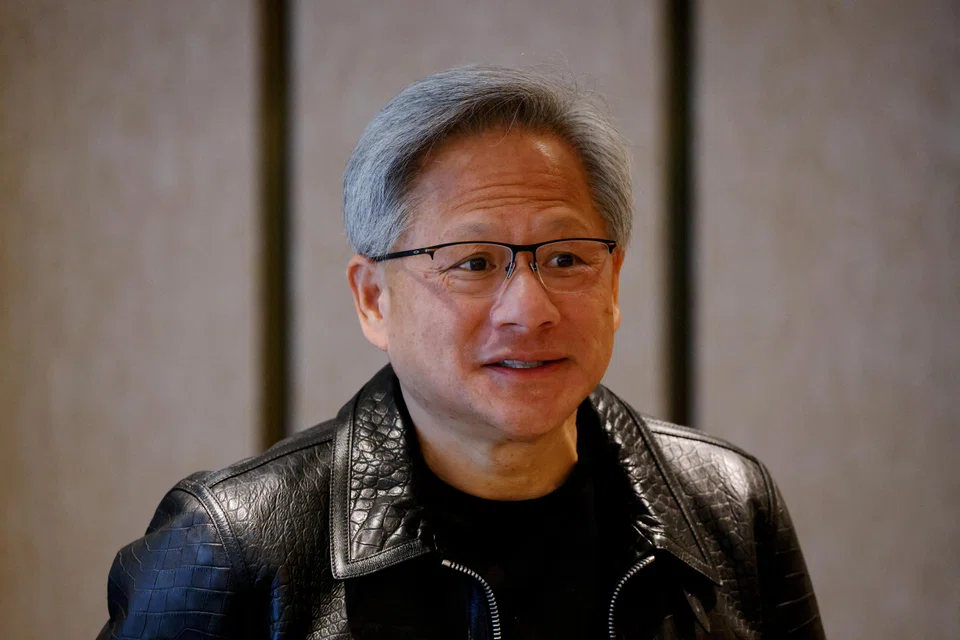
Jensen Huang is reportedly considering a return as chief executive of Nvidia, just days after stepping down from the leadership of the world’s most influential artificial intelligence chipmaker, as prominent technology executives and investors push for his reinstatement.
The reported comeback effort comes amid an escalating leadership crisis at Nvidia, with influential figures in Silicon Valley urging the company’s board to reconsider its decision while senior officials in Washington are calling for a broader leadership change.
Huang has discussed the possibility of returning with people close to him, according to a Financial Times report published on November 15, citing individuals familiar with the discussions.
One of his allies reportedly said a group of Silicon Valley executives was organising a campaign to lobby Nvidia’s board and seek support from the White House for his return.
The development has introduced another layer of uncertainty into the leadership transition at a company whose processors have become central to the global expansion of artificial intelligence.
Investors and technology executives rally behind Huang
Support for Huang’s possible return has emerged from influential figures across the technology and investment industries.
An online petition calling for his reinstatement has attracted more than 165,000 signatures, with SpaceX and Tesla chief executive Elon Musk among those supporting the campaign.
Other prominent supporters include Epic Games founder Tim Sweeney, Y Combinator president Garry Tan and technology investor Brad Gerstner.
Gerstner, whose investment firm Altimeter Capital holds shares in Nvidia, joined Gavin Baker of Atreides Management in urging the company’s board to keep all leadership options open, including the possibility of bringing Huang back.
Some Nvidia employees have also publicly defended his leadership.
More than 7,500 petition signatories identified themselves as Nvidia employees, although the identities and employment status of individual signatories have not been independently established.
The support reflects Huang’s influence within the technology industry and the extent to which his leadership has been associated with Nvidia’s growth during the artificial intelligence boom.
However, backing from investors and technology executives does not automatically determine who will lead the company. The decision ultimately rests with Nvidia’s board.
Leadership crisis follows Huang’s departure
Huang stepped down on November 11 after allegations surrounding his personal relationships raised questions about corporate governance and possible national security implications.
Reports concerning an alleged relationship with a woman suspected of having links to Chinese intelligence intensified scrutiny of the company’s business relationships and its exposure to sensitive technology transfers.
The allegations have also drawn attention to questions surrounding the movement of advanced Nvidia chips to Chinese entities.
Huang’s departure followed pressure from the company’s board, which accepted his resignation and appointed chief financial officer Colette Kress as interim chief executive.
Nvidia has also appointed Harvey Jones as chairman of its board.
The board’s immediate responsibility is to manage the transition while addressing the concerns surrounding the circumstances that led to Huang’s departure.
Reports have indicated that Nvidia approached Arm Holdings chief executive Rene Haas as a possible successor. However, the company’s board has said that a formal search process had not been initiated at that stage.
The possibility of Huang returning therefore creates a difficult situation for the board, which must consider shareholder confidence, corporate governance and the company’s long-term leadership needs.
Washington raises concerns about Nvidia’s leadership
The reported campaign to reinstate Huang is facing resistance from parts of the US government.
Treasury Secretary Scott Bessent has called for Nvidia’s board to consider an external candidate rather than simply restore Huang to his former position.
Bessent has also raised questions about whether Nvidia adequately addressed concerns surrounding the alleged movement of its advanced chips through intermediary companies.
The concerns are significant because semiconductor technology has become an important part of the strategic competition between the United States and China.
Advanced processors manufactured by Nvidia are widely used in artificial intelligence development, data centres and other computing applications.
Washington has imposed restrictions on the export of certain advanced semiconductor technologies to China because of their potential military and strategic applications.
Any questions about compliance with those restrictions could therefore extend beyond Nvidia’s commercial interests to broader US national security concerns.
Nvidia has maintained that it complies with applicable US export regulations.
The disagreement over Huang’s possible return consequently involves more than a leadership preference. It also raises questions about how the company should manage regulatory scrutiny and its relationships with customers and international markets.
Nvidia’s financial performance adds to the pressure
The leadership uncertainty comes at a particularly important time for the chipmaker.
Nvidia is scheduled to release its latest financial results on November 17, with investors expected to examine its revenue growth, demand for artificial intelligence processors and outlook for the coming quarters.
The results will also provide an opportunity to assess how the leadership crisis is affecting confidence in the company’s business.
Nvidia occupies a central position in the artificial intelligence industry because its graphics processing units are widely used to train and operate advanced AI systems.
Technology companies and data-centre operators have committed substantial resources to expanding their computing capacity, creating strong demand for the company’s processors.
A prolonged leadership dispute could complicate investor assessments of the company’s strategic direction, particularly if uncertainty develops over its relationships with customers, regulators and suppliers.
For shareholders, the immediate question is whether the board can provide stable leadership while maintaining the company’s competitive position.
A decision with wider implications for the AI industry
Huang’s possible return remains uncertain, and the campaign by his supporters does not guarantee that Nvidia’s board will reverse its decision.
The company must weigh the value of his experience and influence against the concerns that contributed to his departure.
The situation also illustrates how leadership decisions at major technology companies can have consequences extending beyond their shareholders.
Nvidia’s position in the global AI supply chain means that changes in its management, regulatory relationships and export strategy could affect businesses and governments that depend on its technology.
For now, Colette Kress remains interim chief executive while the board considers its next steps.
Whether Huang returns or the company appoints a different leader, the decision will shape an important period for a business operating at the centre of the global artificial intelligence industry.









Leave a comment