


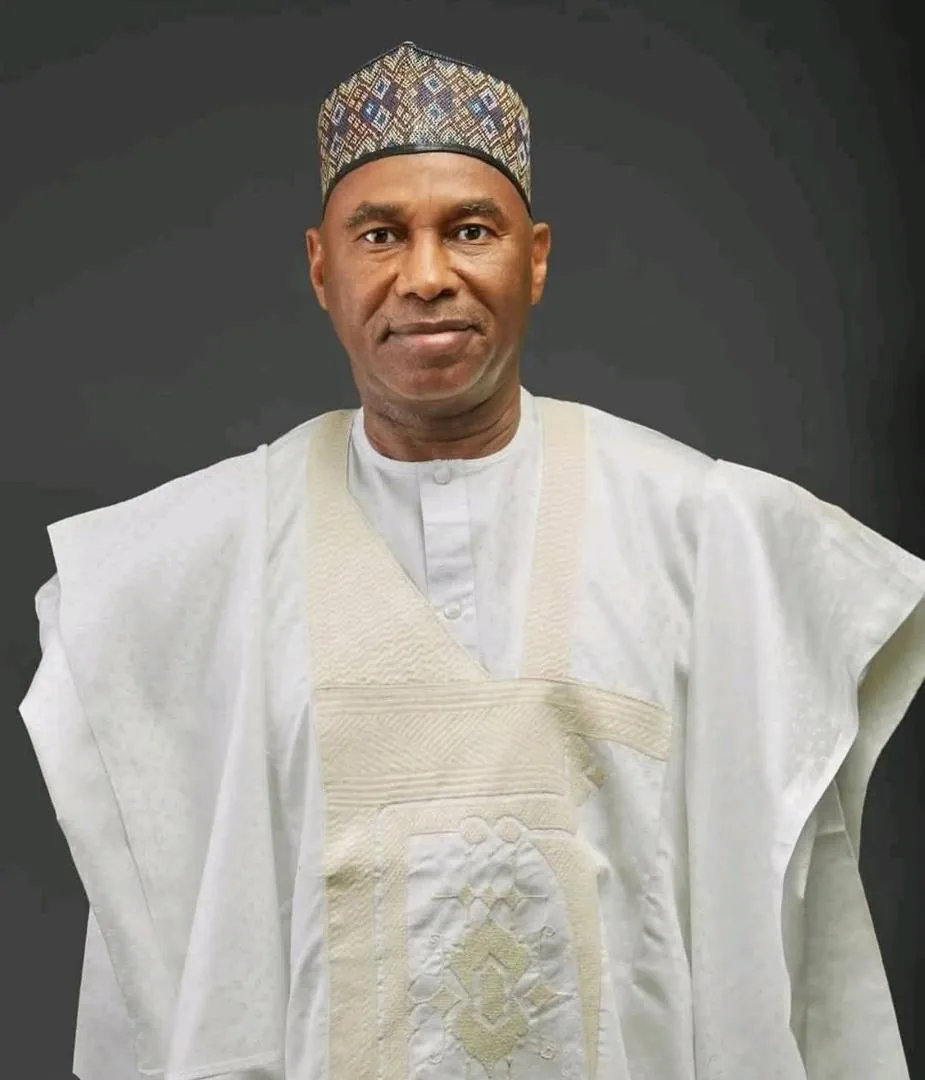
The question of who should lead Adamawa State after the 2027 governorship election has continued to generate political discussions, with the emergence of Alhaji Ahmed Tijjani Galadima Aminu as the All Progressives Congress governorship candidate adding a new dimension to the state’s political landscape.
Galadima, a former Executive Secretary of the Petroleum Technology Development Fund, PTDF, is presenting himself as a candidate whose experience in public administration, financial management and institutional development could help address some of the challenges confronting the state.
His emergence has attracted attention because of his professional background and the development agenda he has proposed for Adamawa.
Born on February 26, 1964, in Yola, Galadima attended Hammawa Primary School and Yelwa Government Secondary School, now Aliyu Mustapha College.
He obtained a Bachelor of Science degree in Agriculture from Ahmadu Bello University, Zaria, in 1988, and later earned a Master’s degree in Banking and Finance from the University of Ibadan in 1998.
His professional career spans both the private and public sectors, including engagements with the Gongola State Revenue Service, Gamji Bank and Rock Shell International.
However, his most prominent public service experience came through the Petroleum Technology Development Fund, where he spent several years overseeing education, training and human capital development programmes.
He was appointed Executive Secretary of PTDF in 2023, where he supervised programmes designed to develop skilled manpower for Nigeria’s petroleum and energy sectors.
His supporters argue that the experience exposed him to institutional management, international partnerships, scholarship administration and the implementation of large-scale development programmes.
In May 2026, Galadima emerged as the APC governorship candidate after winning the party’s primary election with 414,444 votes, defeating other aspirants, including Abdulrazak Namdas and Abdulrahman Haske.
He subsequently resigned from his position at PTDF to pursue his governorship ambition.
His campaign is built around the Adamawa Rising Agenda, which focuses on infrastructure development, agricultural transformation, human capital development, public-sector transparency, solid minerals and economic opportunities.
One of the arguments surrounding his candidacy is the question of political representation.
Adamawa Central Senatorial District has not produced an elected governor since the return of democracy in 1999, a development that has continued to feature in conversations about political equity and power distribution in the state.
For his supporters, Galadima’s emergence provides an opportunity to address this longstanding concern while bringing his administrative experience into state governance.
However, his candidacy has also attracted criticism, particularly from some young people and political observers who have questioned his grassroots connection, political acceptance and ability to translate federal administrative experience into effective state leadership.
These concerns raise important questions that deserve attention beyond campaign promises.
Can his experience at PTDF translate into improved healthcare, education, security, agriculture and employment in Adamawa?
Can he build an inclusive government that accommodates the state’s diverse ethnic, religious and political interests?
And, perhaps most importantly, can the Adamawa Rising Agenda move beyond campaign commitments to measurable development outcomes?
Adamawa is a state with enormous agricultural potential, mineral resources, a growing population and significant human capital. However, unemployment, insecurity, infrastructure deficits and limited economic opportunities remain important concerns for many residents.
Addressing these challenges will require more than political experience or impressive academic qualifications. It will demand transparency, effective resource management, accountability and an understanding of the everyday needs of ordinary citizens.
Ultimately, whether Galadima is the round peg in the round hole for Adamawa is a question the electorate must determine through careful examination of his record, proposals, leadership capacity and commitment to public service.
His supporters have presented a case based on experience and institutional competence, while critics have raised questions about political acceptance and grassroots engagement.
The February 2027 governorship election will provide an opportunity for Adamawa voters to assess these arguments and decide which candidate offers the most convincing direction for the state’s future.







Leave a comment