


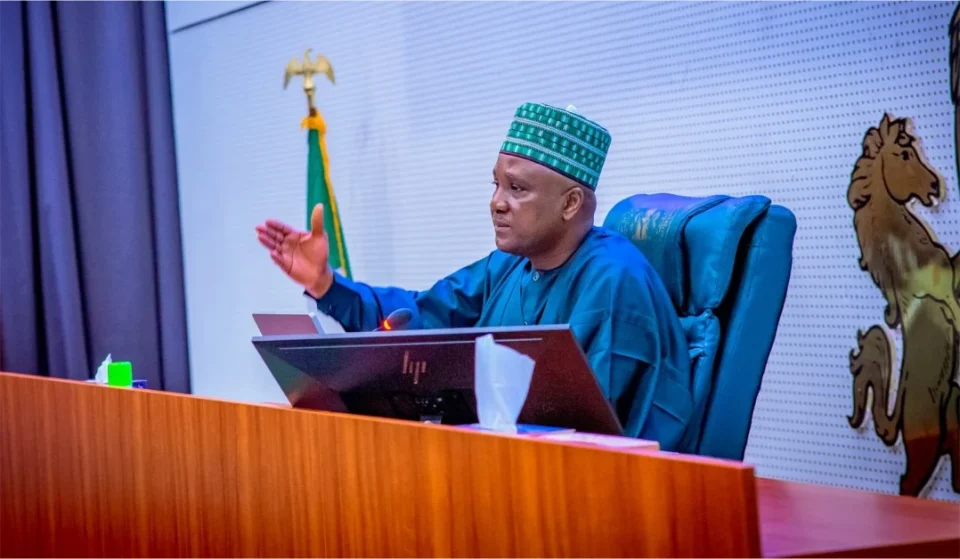
The Speaker of the House of Representatives, Tajudeen Abbas, has called for stronger accountability in Nigeria’s petroleum industry, urging the Nigerian National Petroleum Company Limited to operate transparently and in line with the Petroleum Industry Act.
The demand comes amid renewed legislative scrutiny of the oil and gas sector, including revenue management and implementation of PIA reforms.
The 2021 Act restructured the former Nigerian National Petroleum Corporation into a commercially oriented limited liability company and established regulators for the upstream, midstream and downstream segments. It was designed to improve governance, attract investment, strengthen transparency and ensure petroleum resources deliver greater benefits to Nigerians.
Abbas has consistently identified legislative oversight as essential to achieving those objectives. In December 2024, he said the technical complexity of the petroleum industry, information gaps and the changing nature of the sector could limit lawmakers’ ability to perform effective oversight. He urged members of petroleum-related committees to build technical knowledge and engage stakeholders.
The Speaker also said the National Assembly had a responsibility to monitor regulatory institutions and ensure effective implementation of the PIA. The Act provides a framework for transparency, accountability and sustainable management of petroleum resources.
The House has continued to examine issues arising from NNPC Limited and other industry players. In October 2026, the House Committee on Petroleum Resources (Downstream) began a preliminary investigation into a petition alleging money laundering and abuse of office against an NNPC executive. The committee said it had not reached a conclusion and that all parties would be allowed to present their positions.
The committee also considered complaints relating to gas distribution licences and discussed possible amendments to the PIA, including provisions on crude oil supply to domestic refineries, licensing and petroleum imports. It said the measures were intended to strengthen the downstream sector and protect investments in local refining.
The accountability debate has also been shaped by concerns about oil and gas revenue reaching the Federation Account. In February 2026, President Bola Tinubu signed an executive order introducing measures to improve direct remittance of specified petroleum revenues, reduce deductions and reposition NNPC Limited as a commercial operator. The Presidency said the measures were intended to curb leakages and improve transparency.
Abbas’s call places renewed focus on NNPC Limited’s responsibility to account for its operations, financial obligations and management of national petroleum assets. Oversight, disclosure and legal compliance remain central to public confidence across the petroleum industry.
Nigeria depends heavily on petroleum earnings to finance public services and development. Stakeholders have therefore demanded that reforms translate into improvements in production, revenue collection, investment and accountability.
The National Assembly is expected to sustain its oversight role as implementation of the PIA and other petroleum reforms comes under further review.








Leave a comment