


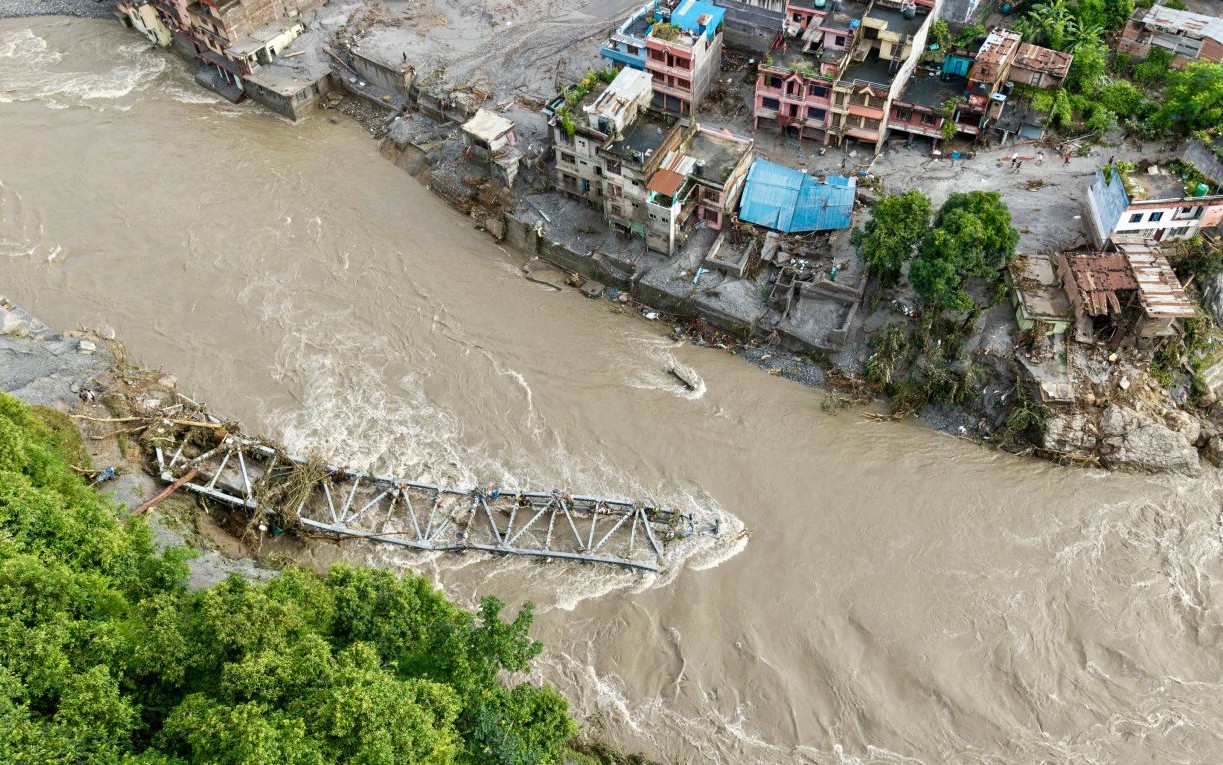
Nepal will begin work this fiscal year to drain four high altitude glacial lakes as part of efforts to reduce the risk of catastrophic floods, officials said on Friday.
The plan follows an August glacier collapse that triggered landslides and flash floods in the border region with China, killing more than 1,400 people. More than 5,000 people remain missing, according to authorities.
The project will target Thulagi, Lower Barun, Lumding Tsho and Hongu II, four lakes identified among Nepal’s most potentially dangerous. They are located between 4,050 metres and 5,483 metres above sea level.
Officials said controlled drainage channels will direct water into nearby rivers, reducing pressure on the natural dams holding back the lakes. Detailed studies and design work will begin during the fiscal year ending in July 2027.
The $50 million project is expected to include sensors, flood forecasting and warning systems, as well as measures to improve the resilience of communities downstream. The drainage work could take up to six years to complete.
Nepal has previously lowered the water levels of Tsho Rolpa and Imja glacial lakes to reduce flood risks.
Scientists say rising temperatures are causing Himalayan glaciers to retreat and leaving behind unstable lakes that can burst because of earthquakes, avalanches and other factors. Nepal has recorded about 26 glacial lake outburst floods over the past four decades.









Leave a comment