


By Benson Daniel
Women in England living with incurable, advanced breast cancer will gain access to a life-extending drug through the National Health Service following a major reversal of an earlier funding decision.
The treatment, known as Enhertu, will be offered to patients with HER2-low metastatic breast cancer, a form of the disease in which cancer has spread to other parts of the body and cannot currently be cured. Around 1,000 women a year are expected to benefit from the decision.
The drug, developed by AstraZeneca and Daiichi Sankyo, is a targeted treatment designed to deliver cancer-killing medicine directly to cells carrying the HER2 protein. It is administered through an intravenous infusion, generally once every three weeks.
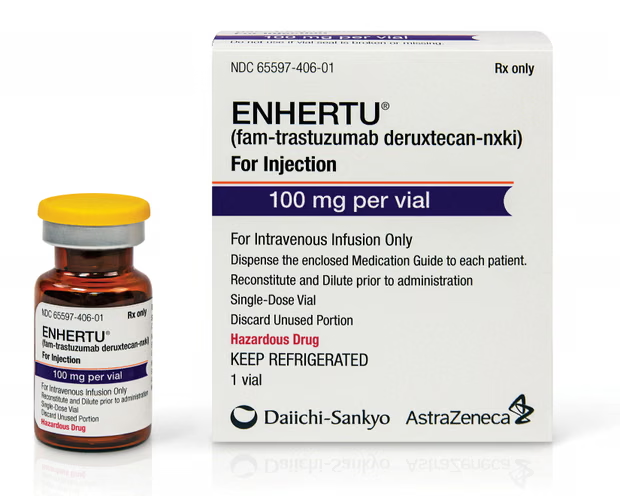
Clinical trial results have shown that Enhertu can significantly delay the progression of the disease and extend survival compared with standard chemotherapy. Evidence presented in the latest assessment showed that patients receiving the drug had progression-free survival of about 9.9 months, compared with 5.1 months for those receiving chemotherapy. Overall survival was extended by about 6.6 months on average.
The decision reverses an earlier refusal to recommend the treatment for widespread NHS use in England. In 2024, health authorities concluded that the drug did not represent sufficient value for money under the cost-effectiveness rules then in place.
The latest approval followed negotiations over the price of the medicine and changes to the framework used to assess the value of certain treatments. The revised arrangement has enabled the NHS to make Enhertu available to eligible patients from September 17, 2026.
The decision has been welcomed by patients and cancer campaigners, although some organisations have highlighted the long wait for access. Enhertu has already been available to eligible patients in Scotland since 2023, meaning access has differed across parts of the UK.
For patients diagnosed with metastatic breast cancer, the treatment does not represent a cure. Instead, its importance lies in giving some women additional time before their disease progresses and extending overall survival.
The decision also highlights the continuing challenge faced by health systems in balancing the cost of advanced medicines with their potential clinical benefits. The agreement means eligible women in England will now have another treatment option when standard chemotherapy may no longer provide sufficient benefit.
Health officials and cancer organisations have described the move as an important step for patients with HER2-low advanced breast cancer, while attention is likely to remain on how quickly eligible patients can begin receiving the treatment through NHS services.











Leave a comment