


By Benson Daniel
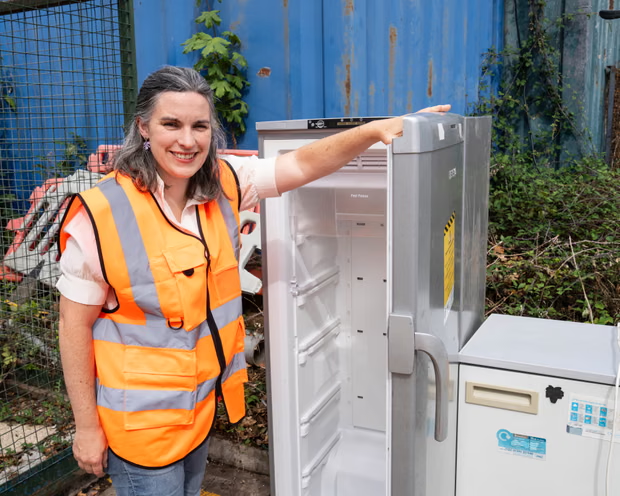
Recycling centres across England and Wales are struggling to cope with a growing mountain of unwanted fridges and freezers, as unusually hot weather, rising demand for additional refrigeration and a shortage of specialist recycling facilities combine to create a major waste-management crisis.
In Oxfordshire alone, recycling centres are receiving almost three articulated lorries filled with discarded fridges every week. The pressure has become so severe that some councils have introduced tighter restrictions on when residents can bring refrigerators and freezers to recycling centres.
At least 26 council areas have suspended fridge collections this month as authorities struggle to find enough capacity to store and process the appliances.
The problem has been intensified by the closure of three major fridge recycling facilities in recent years. One of the largest, at Newport Docks, went into liquidation last year, leaving more than 80,000 fridges and freezers stranded and putting additional pressure on facilities elsewhere.
Unlike ordinary scrap metal, fridges require specialist treatment because they contain refrigerant gases and foam insulation that can be hazardous if released improperly. The refrigerant must be safely removed before the appliances can be dismantled and processed.
The shortage of specialist treatment capacity has therefore created a bottleneck, with councils continuing to receive unwanted appliances while having fewer facilities available to recycle them.
The unusually hot weather experienced across parts of the UK has added to the problem. High temperatures can place additional pressure on ageing refrigerators and freezers, increasing the number of appliances that fail and need to be replaced.
However, industry figures say the problem is not simply the result of a sudden increase in purchases of new fridges. Overall fridge sales have remained relatively flat, with sales in the first half of 2026 reportedly falling slightly.
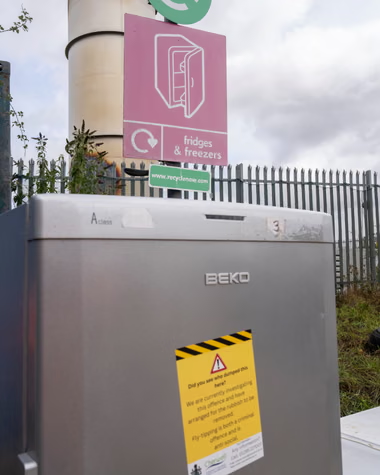
Instead, there has been a longer-term increase in households buying additional or backup refrigeration. The trend initially gained momentum during the Covid-19 pandemic and has continued amid government advice encouraging households to prepare for extreme weather and other disruptions.
Local authorities are increasingly concerned about the financial consequences. Councils have been forced to find temporary storage solutions while waiting for specialist recycling capacity to become available, creating additional costs at a time when many local authorities are already facing severe financial pressures.
The Local Government Association has described the situation as a system failure, arguing that councils should not be left to carry the financial burden of problems elsewhere in the recycling chain.
Under the UK’s waste electrical and electronic equipment system, manufacturers and retailers are expected to fund the collection and treatment of old electrical goods through producer compliance schemes.
Councils argue that where they have to provide temporary storage or alternative arrangements because recycling capacity is unavailable, those additional costs should also be covered by the producers.
The government is considering changes to compliance-fee rules that could take the shortage of recycling capacity into account. However, any changes are not expected to be decided until 2027.
A new specialist recycling facility is also expected to open in January, offering some relief to the sector, although authorities warn it could take time for the plant to reach full capacity.
Without additional capacity, councils fear the backlog could continue to grow, increasing storage costs and creating greater environmental risks from improperly handled refrigeration equipment.
The crisis has exposed wider weaknesses in Britain’s recycling infrastructure and raised questions over whether the existing producer-responsibility system is capable of responding quickly when specialist treatment capacity is lost.









Leave a comment